
How much soil to level or raise a garden?
A heap on the drive, and dips in the lawn
The floor in the living room comes up for underfloor heating, and suddenly there is a heap of soil on the drive. Meanwhile the lawn has dips you twist an ankle in. Spreading one over the other sounds like a free job. But will the heap fill the dips, raise the whole lawn, or bury the bottom of the fence?
One multiplication answers it, if you know the lawn's real area. This post works the sum through for a real garden, says what to check about the soil first, and shows how to measure the lawn and try a raised part in Duimstok.
Volume is area times depth
Everything here comes from one line: m³ = m² × metres of depth. Turn it round and the depth you can raise is the volume divided by the area.
- The heap: a living room 5.0 × 6.0 m dug out 15 cm deep gives 30 m² × 0.15 m = 4.5 m³.
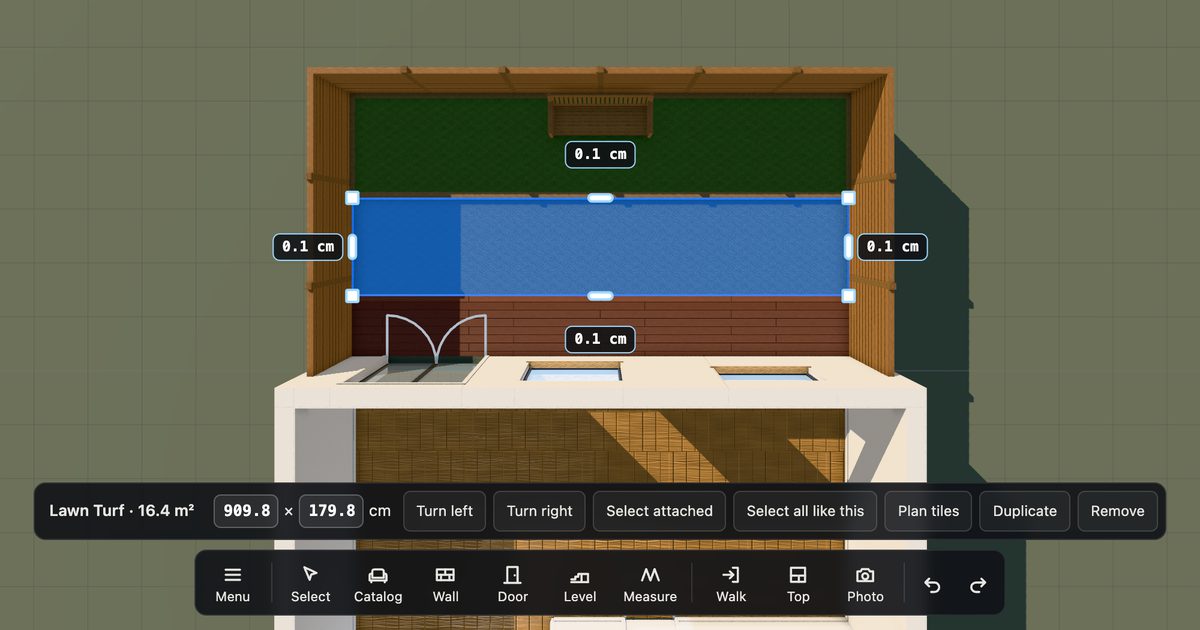
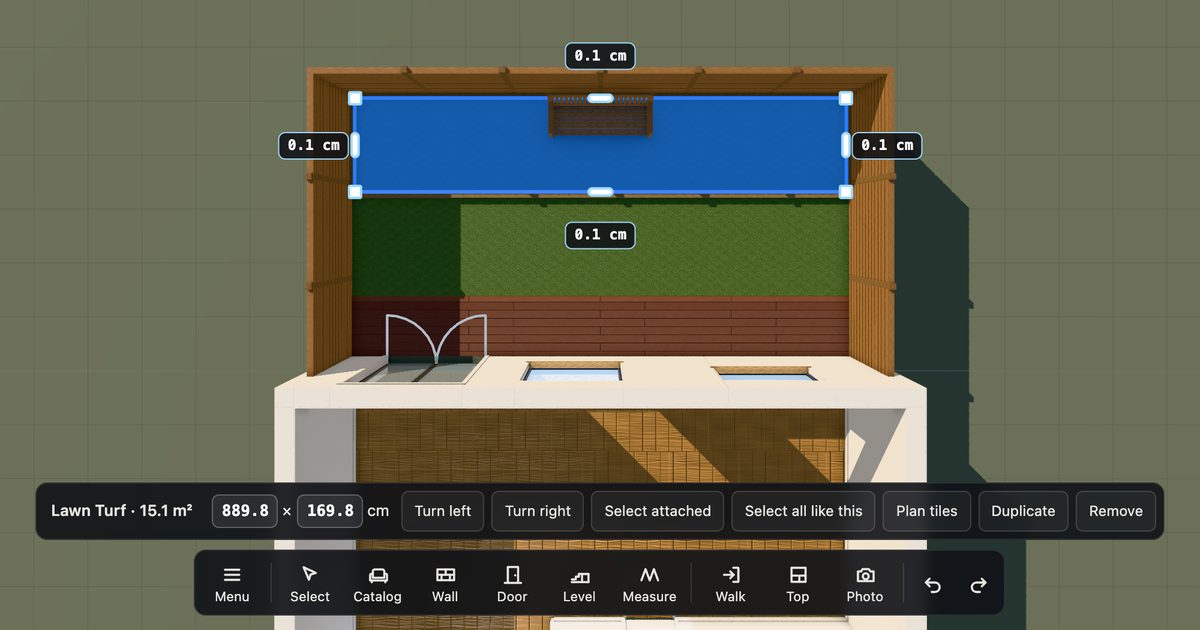
- The lawn: in this garden it is two pieces, 16.4 m² in front and 15.1 m² behind, 31.5 m² in all.
- Spread over all of it: 4.5 ÷ 31.5 = 0.143 m, about 14 cm.
Fourteen centimetres is not levelling, it is raising. It changes where the lawn meets the deck, the fence boards and the door sill. So decide what you want first: fill the dips, or lift a part.
Only filling the dips
Dips are shallower than they look. If they average 3 cm over the whole lawn, that is 31.5 m² × 0.03 m = 0.95 m³, about 24 bags of 40 litres. The rest of the heap needs another place. Soil settles after spreading, so fill a little proud, roll it and water it, and top up the low spots after a few weeks.
Or raise the back of the garden
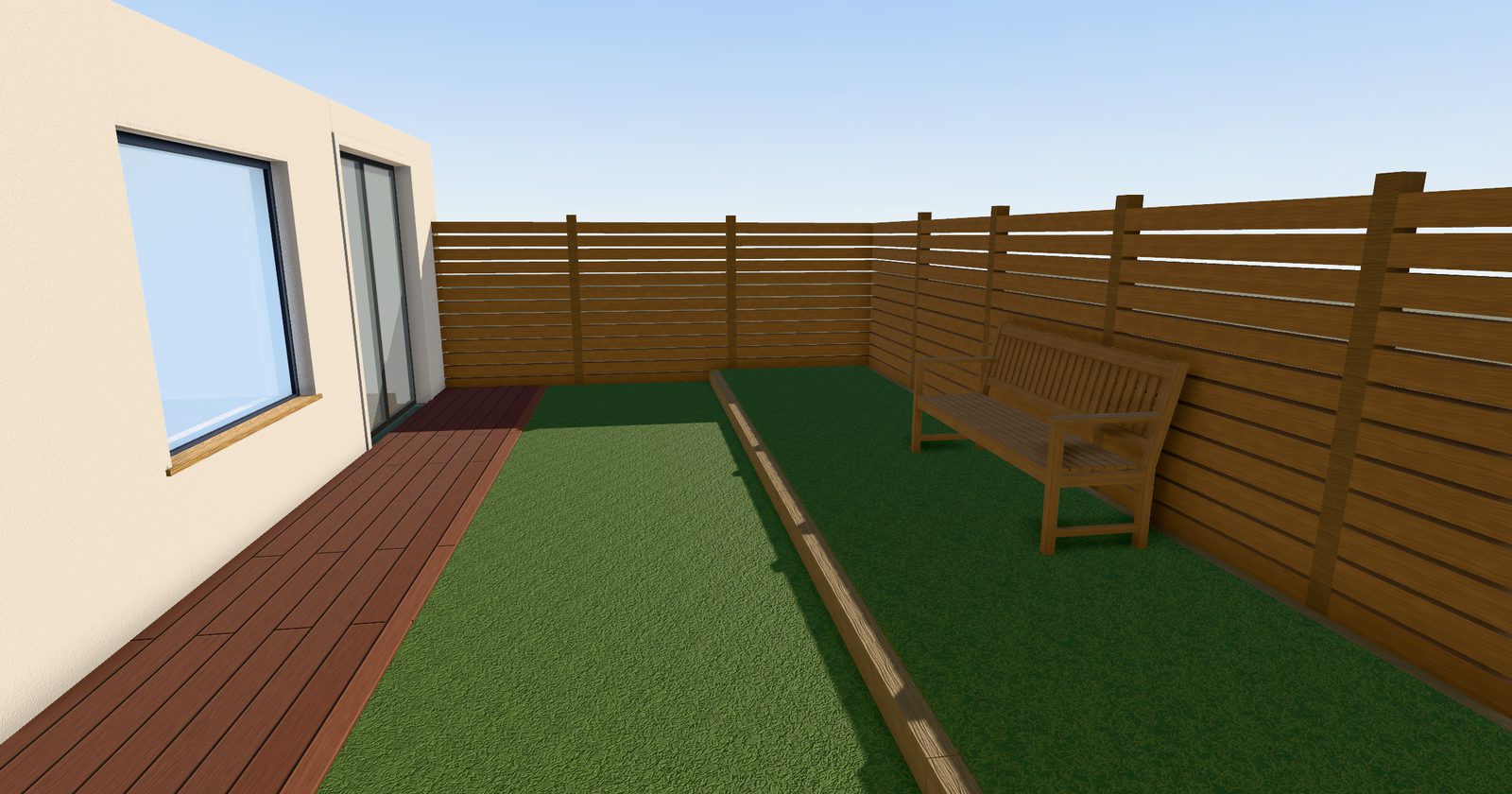
The other use is a step in the lawn: the back part 15 cm higher, behind an oak sleeper edge. Here that part is 15.1 m², so it takes 15.1 × 0.15 = 2.27 m³. The heap covers it, with about 2.2 m³ left for the dips and the beds. One sleeper, 20 cm high, makes the edge, partly buried.
This is also why raising only the back is often the better use of a heap. The front lawn stays at the level of the deck and the door, so nothing changes where people step out of the house, and the 15 cm step becomes a place: a bench on the higher lawn looks back at the house over an edge that reads as a design, not a mistake. Walk it in the model before the first barrow goes out.
Check what is in the heap
Soil from under a house is often not topsoil. Sand, clay or rubble from under a floor is better under the lawn than on top of it: spread it first, then finish with 10 cm or more of good topsoil for the grass. And keep the finished lawn below the damp course and the bottom of wooden fence boards.
Try it
- Press O for the view from above and open Catalog.
- Search for turf, pick Lawn Turf, choose Fill on the bar and click the bare ground.
- Click the lawn: its area in m² is on the bar. Multiply by your depth in metres.
- To raise a part, press Level, type 15 cm, press T until the menu shows Timber sleeper, and drag it out.
- Double-click the lawn and walk up to the new edge.
Limits worth knowing
- Duimstok gives the area; the volume, the bags and the settling are your sums.
- It does not model dips or a sloping lawn: the ground is flat, or a level is.
- It does not know what your soil is made of.
Questions people ask
How much soil do I need to raise a lawn 10 cm?
0.1 m³ for every m². A 30 m² lawn needs 3 m³, about 75 bags of 40 litres, plus a little for settling.
How many 40 litre bags make a cubic metre?
25. A cubic metre is 1,000 litres.
Can I use soil dug out from under the house in the garden?
Yes, but it is often subsoil. Put it underneath and finish with topsoil where the grass or plants will grow.