
Five mistakes clients find after the build, and how to catch them on screen
Callbacks cost more than designs
The expensive mistakes in a garden are rarely about taste. They are about centimetres: a door that opens into the table, a path a wheelbarrow will not fit down, a shed you cannot get the mower out of. Each one is obvious once it is built, and each one means going back, redoing work you were paid for once, and a client who tells their neighbours about it.
All five below show up on screen before anything is ordered, if the design is drawn at its real size. The pictures are from Duimstok, in a first sketch of the garden and then in the finished design.
1. The garden doors hit the table
Garden doors that open outwards sweep an arc of a metre or more, and the obvious place for a table is right outside them. From above (O), Duimstok draws every door's swing on the ground, and turns it amber when something stands in it.
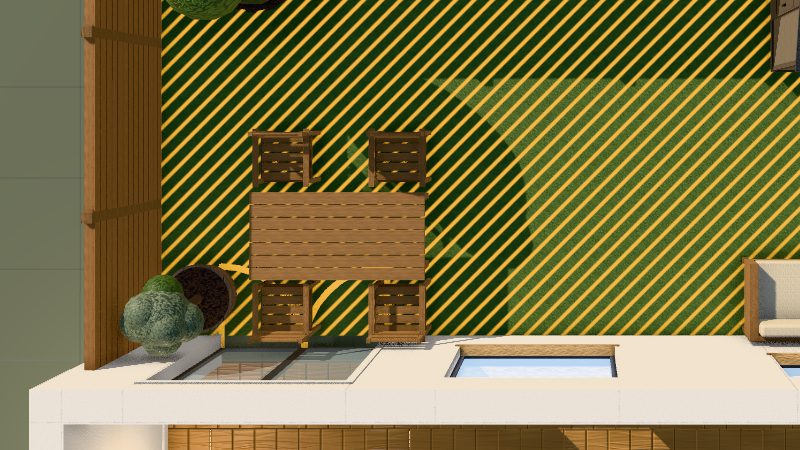
It warns and never refuses, because sometimes you mean it: a door that is only ever opened halfway in winter is a choice. But the client should make that choice looking at the arc, not discover it on the first warm day.
2. A garden nobody can walk into
Push the table and chairs up to the doors, put a large planter beside them, and you may have closed the garden off entirely. On a plan it looks fine, because a plan does not walk.
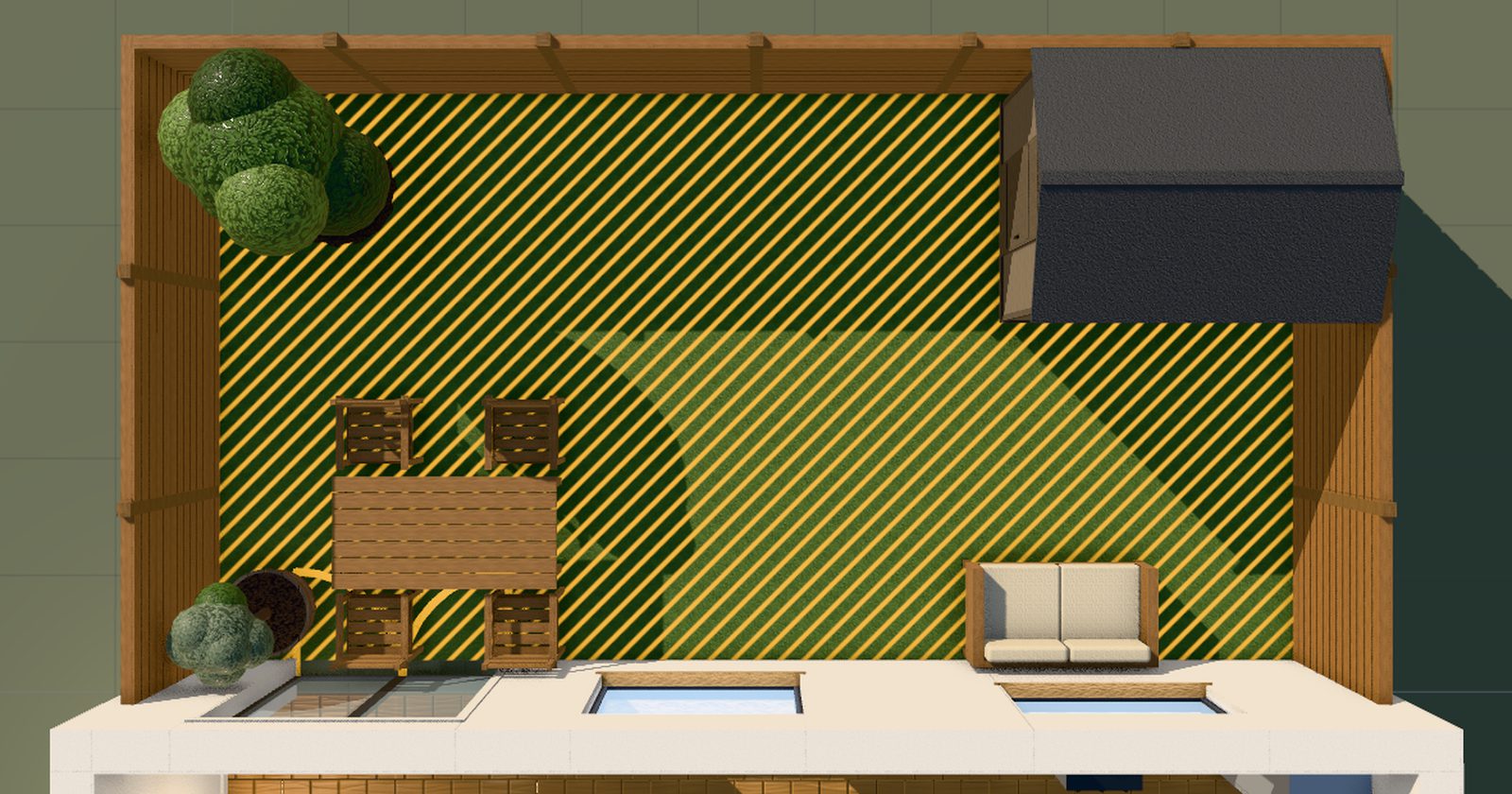
Duimstok does walk: from above, every time something changes, it works out where a person can actually get to, and hatches every room or garden they can no longer reach. In the first sketch at the top of this post, the whole lawn is hatched. Move the dining set a metre and a half along the deck, take the olive out of the doorway, and the hatching disappears.
3. Chairs with nowhere to go
A dining chair needs room behind it to be pulled out and sat on. Against a house wall that is about 90 cm from the table edge; less, and the person on that side eats with the chair pushed against the brickwork.
Select any piece from above and Duimstok shows the gap from each of its sides to the nearest wall or piece, in centimetres.
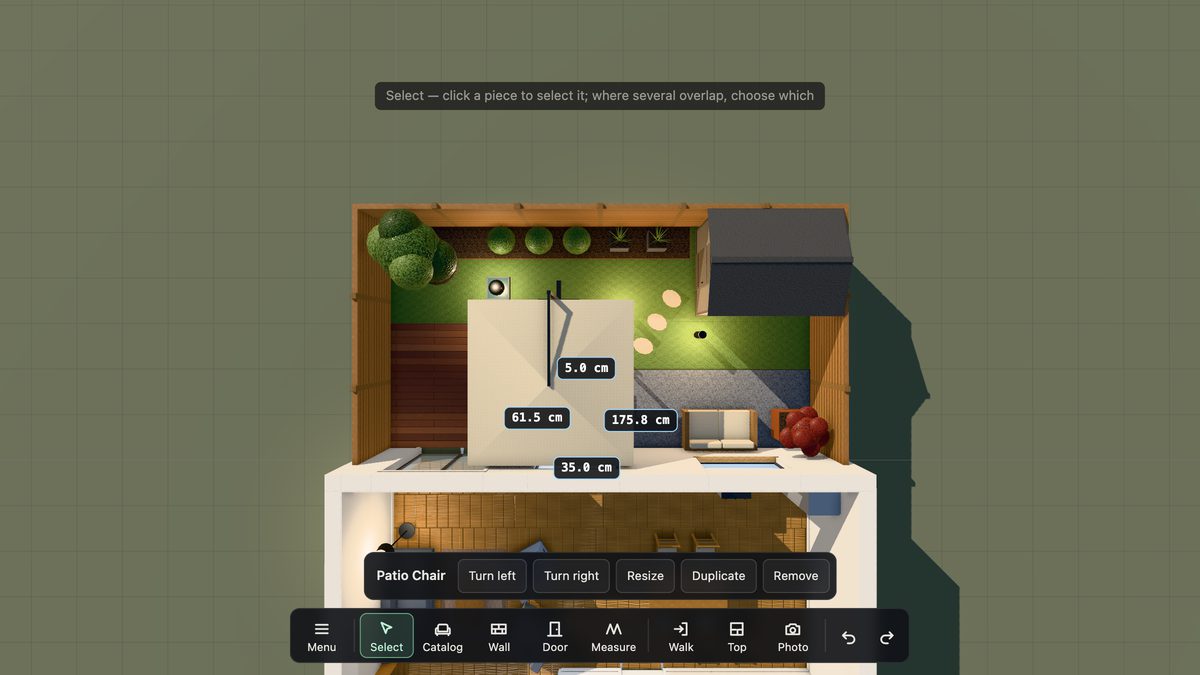
Each reading is also a button. Click it, type the gap you want, and the piece moves to make it so. The guide to space around furniture has the numbers worth aiming for.
4. A parasol over the neighbour's fence
A 3 m parasol fits on a 3 m patio. Its canopy then hangs over the fence into next door, or into the house wall. On paper this only shows if someone draws the canopy, and nobody does.
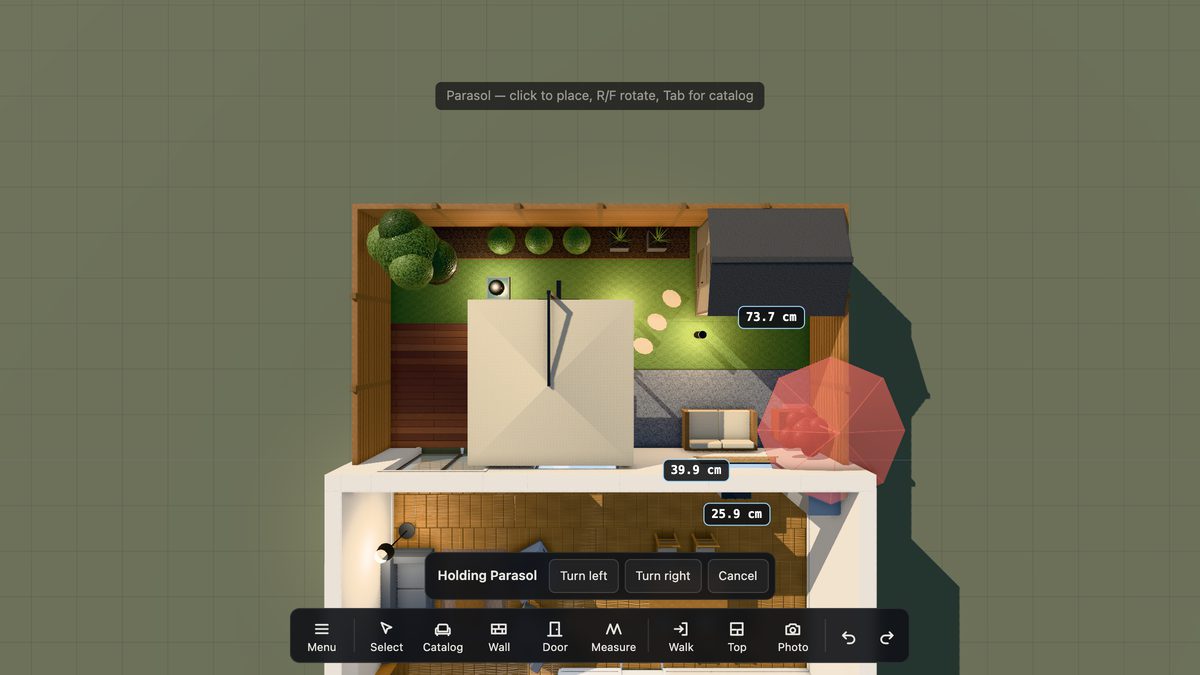
In Duimstok a parasol's base takes floor space and its canopy takes air: the canopy may not cross a fence or the house, or overlap another canopy, a tree or the shed. Aim it where it does not fit and it turns red before you place it.
5. A shed you cannot get a mower out of
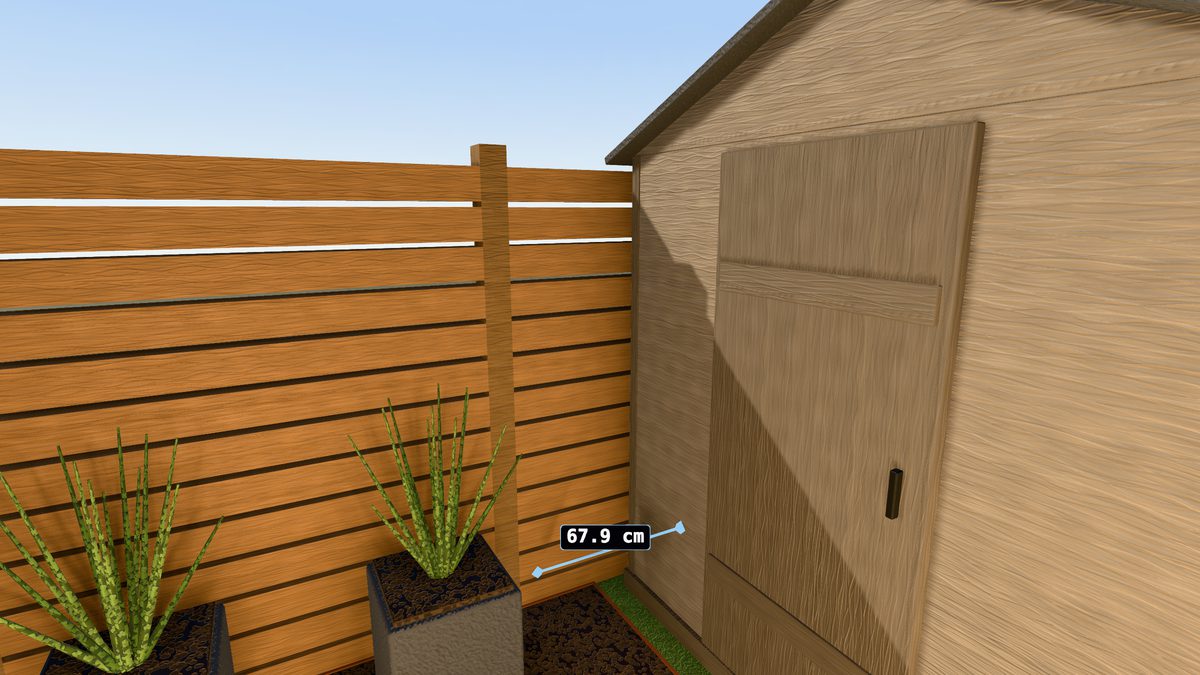
A shed in the corner, a row of planters along the back fence, and the planting is lovely until the first time someone has to wheel a mower out. A shed door wants about a metre clear in front of it.
Press M for the measuring tape, click two points and it reads out the distance in centimetres. It works while you walk, so you can measure what you are looking at.
Walk it before anyone signs
The five checks above are rules. The last check is not: double-click the ground from above and walk the garden at eye height. You will notice things no rule covers, such as the shed blocking the only view out of the kitchen, or a bed that is too deep to weed from the path. The walk-through is also what you show the client.
What it will not catch
- Levels: the ground is flat, so falls, drainage and steps are yours to check.
- Anything underground: cables, pipes, roots and old foundations.
- How big the planting will be in five years.
- The client's taste. That is still your job.
Questions people ask
Does Duimstok stop me from putting something in the wrong place?
Only where it physically cannot go, such as into a wall or on top of another piece. A blocked door swing and a garden nobody can reach are warnings, because sometimes you mean it.
How much room should I leave in front of a shed door?
About a metre, so a mower or a wheelbarrow can come out and turn. Measure it with the tape before you place the planting.
Where do I see the gaps around a piece?
From above. Select a piece and the gap from each of its sides to the nearest wall or piece is shown in centimetres. Click a reading to type the gap you want.
Why is part of my garden hatched?
Hatching means nobody can walk there from the house any more. Something is blocking the way, usually furniture across a door or a narrow passage. Move it and the hatching goes.