
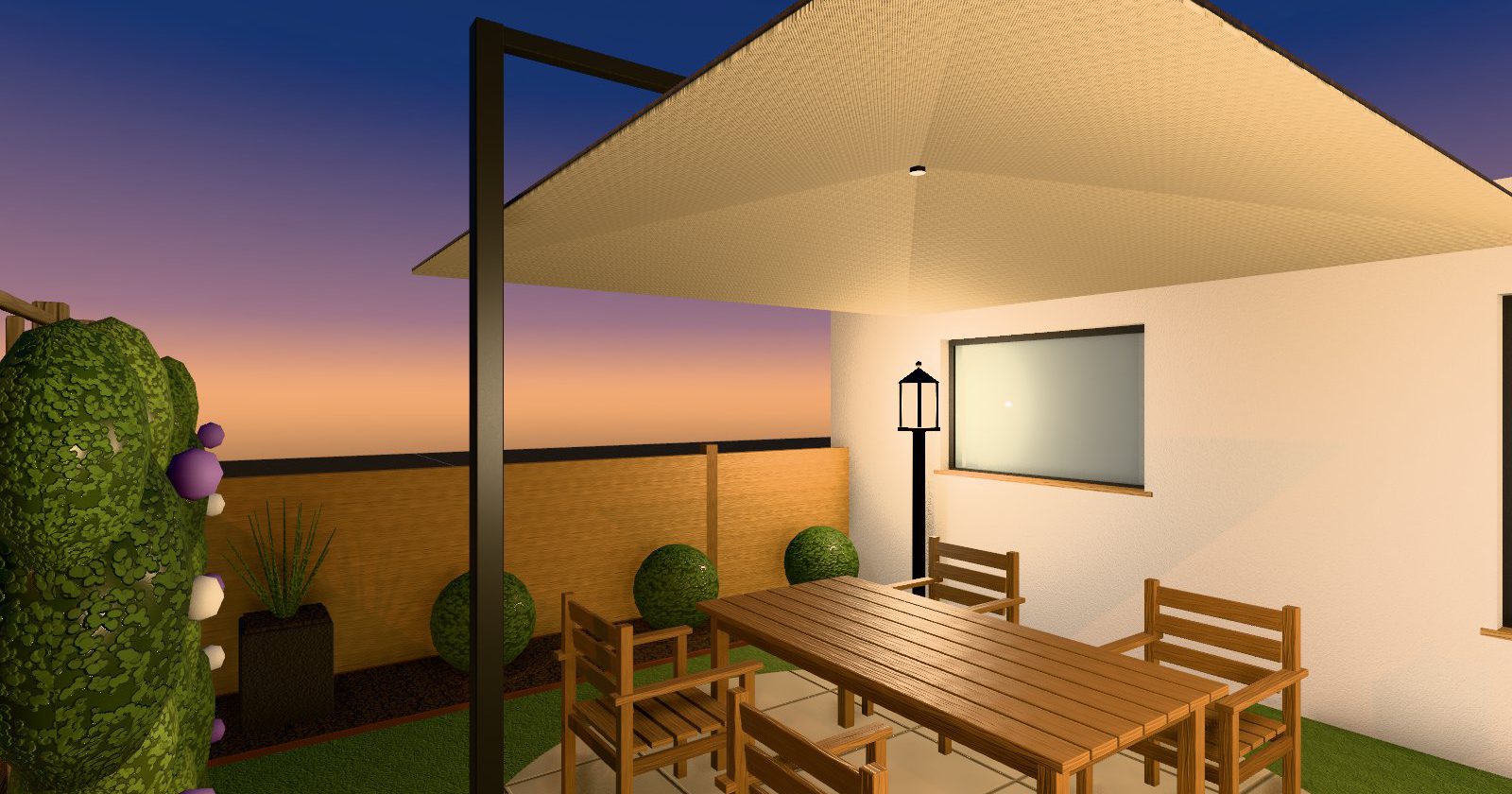
See your home after dark: plan lamps and garden lights in 3D
Daylight hides the problem
Every room and every garden looks fine at noon. The lamp in the wrong corner, the dark stretch of path, the patio lit only by the kitchen window: those show up at nine in the evening, after the cable is buried and the lamp is bought.
It is hard to imagine from a plan, because a plan has no time of day. A model you can dim does. This guide uses the evening setting in Duimstok to place lamps indoors and out, and to see what they light before any of it is real.
Turn it to evening
In Duimstok, open the catalogue (Tab), then Light & layout, and press Evening. The sun drops, the sky turns to dusk, the daylight through the windows fades, and what is left is the lamps you have placed. Press it again for day. Nothing else changes, so you can switch back and forth while you move a lamp.
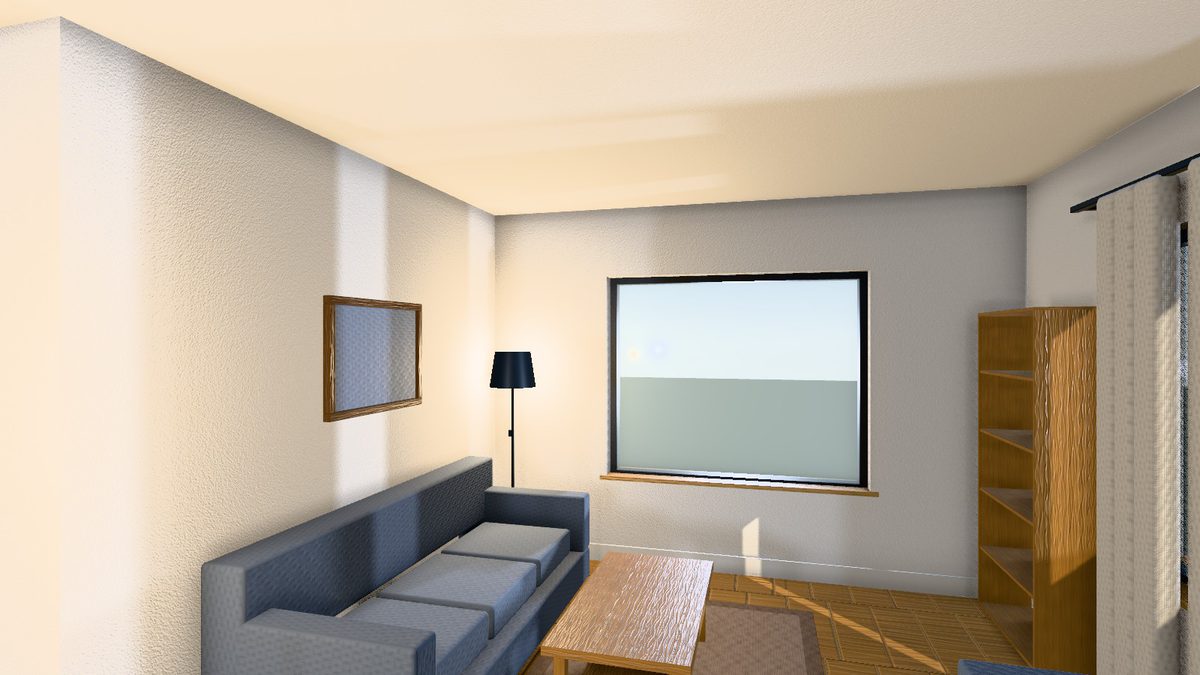
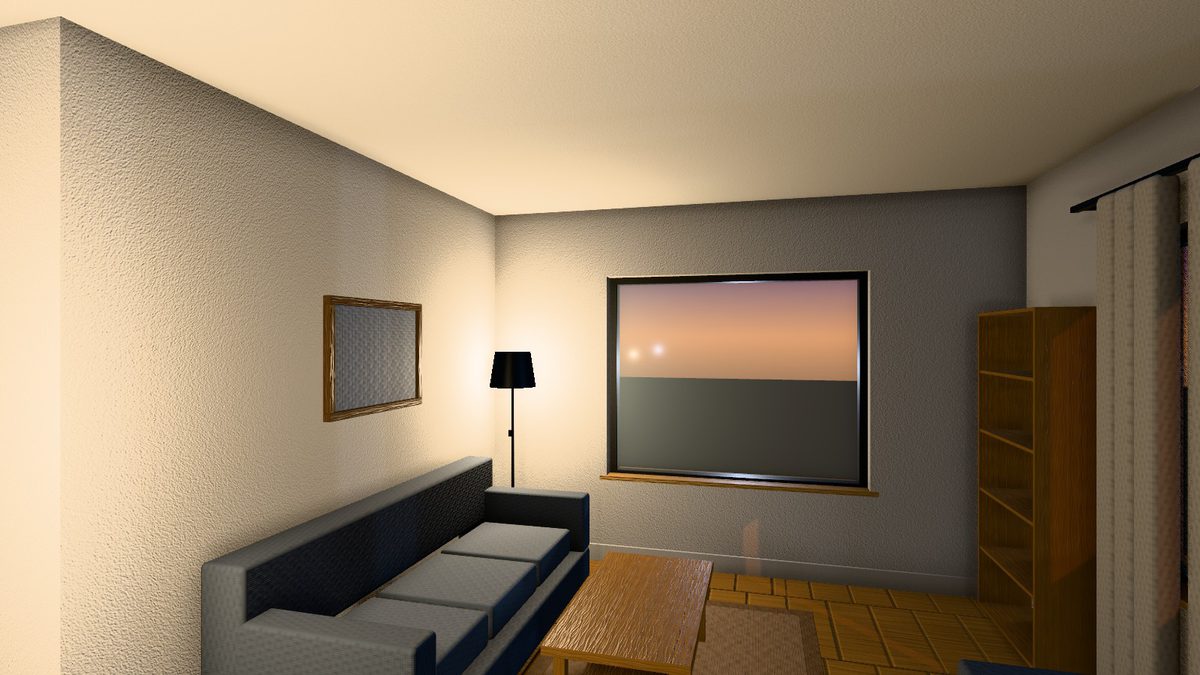
The comparison is the point. In the evening picture the light pools in the corner by the lamp and falls away along the sofa. If you read at the far end, that is the argument for a second lamp, or for moving this one.
Lamps indoors
The catalogue has a floor lamp and a pendant. Place them like any furniture: walking, with Tab, or from above with O, where a floor lamp can be dragged into place and a pendant hangs from the ceiling straight above where you click.
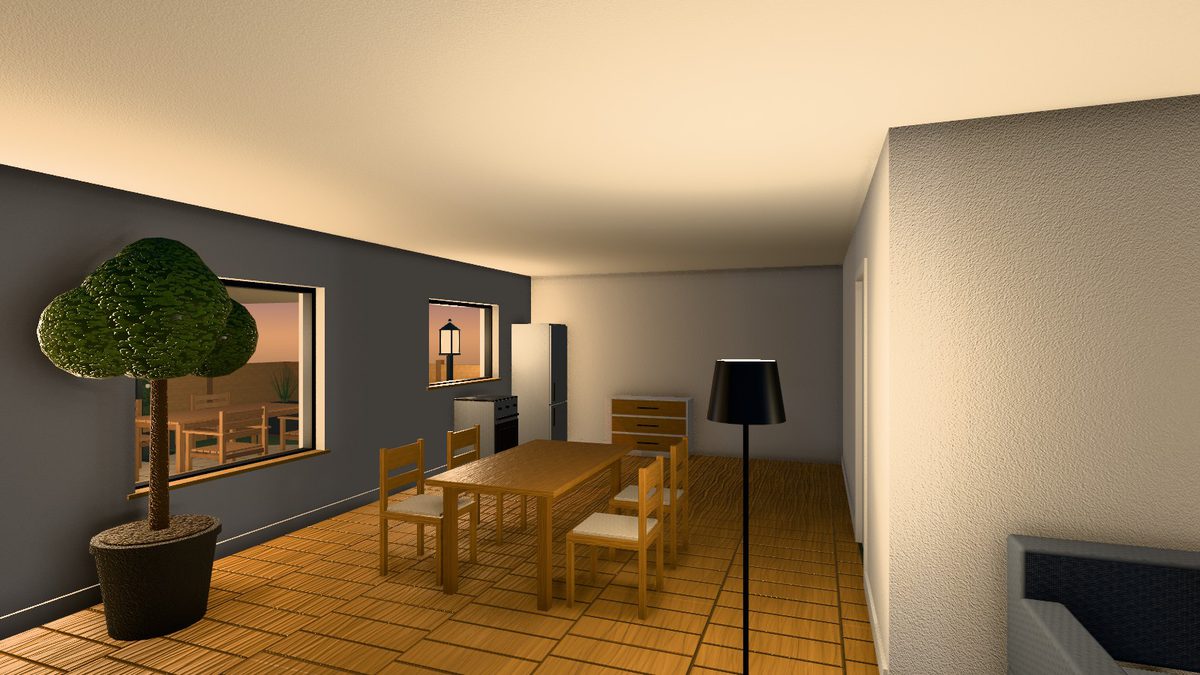
Two habits help. Light the places where something happens, such as reading, eating or cooking, rather than the middle of the room. And check the walk between them: the route from the door to a light switch is the one you take in the dark.
Lights in the garden
Outside there are lantern posts, low bollard lights, a wall lantern for the house wall or a fence, and a fire pit, which glows as well. Path lights work best every 2 to 3 m, a little to one side, alternating sides on a wide path. A light at the door and one at the place you sit do more than a row of them along the fence.
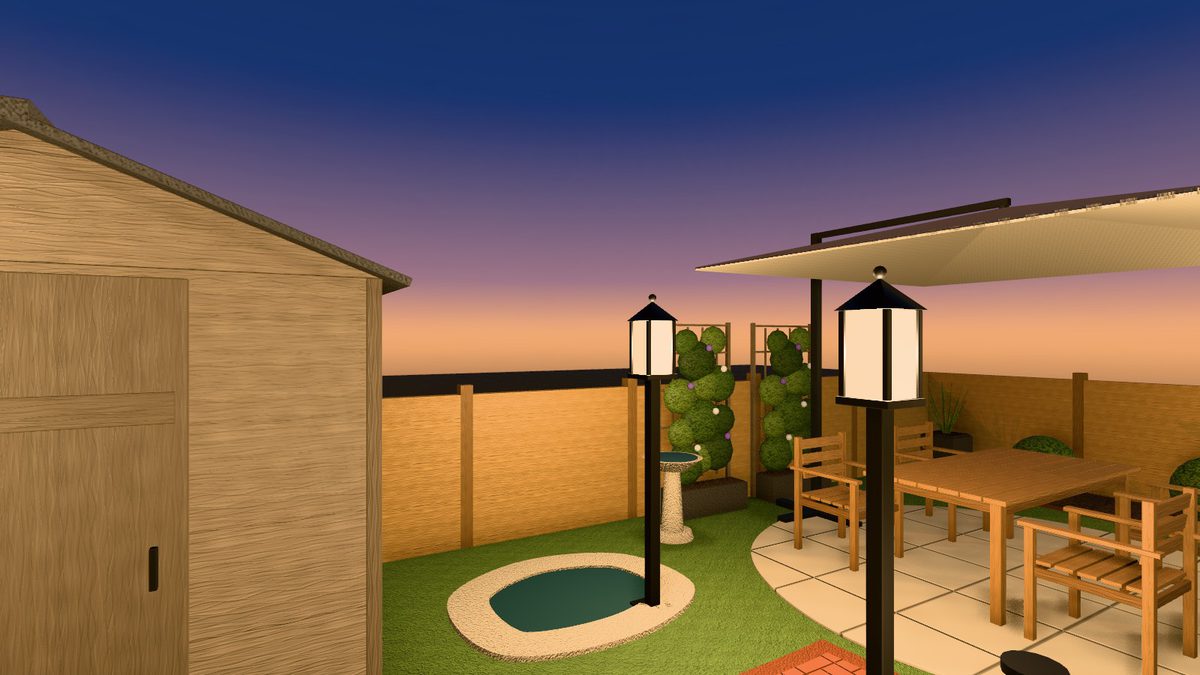
A wall lantern on a 1.2 m fence has to sit below the top of the fence, which is lower than you might expect. On a fence that height it is mounted at about a metre, more path light than face light.
Eight lamps at a time
One limit to plan around: only the first eight lamps you place light the scene. Any more are still shown, with their glass glowing, but they do not light anything, and the app tells you so when you place one. Eight is enough for a living room and a garden. On a bigger house, light one part at a time: place the lamps for the garden, look, then take them up and do the living room.
The house in these pictures has exactly eight: two floor lamps inside, and four lantern posts, a bollard and a wall lantern outside.
Check it from above at dusk
The overview works in the evening too. Press O with the evening on and you see the whole plan at once, every pool of light and every dark gap between them.
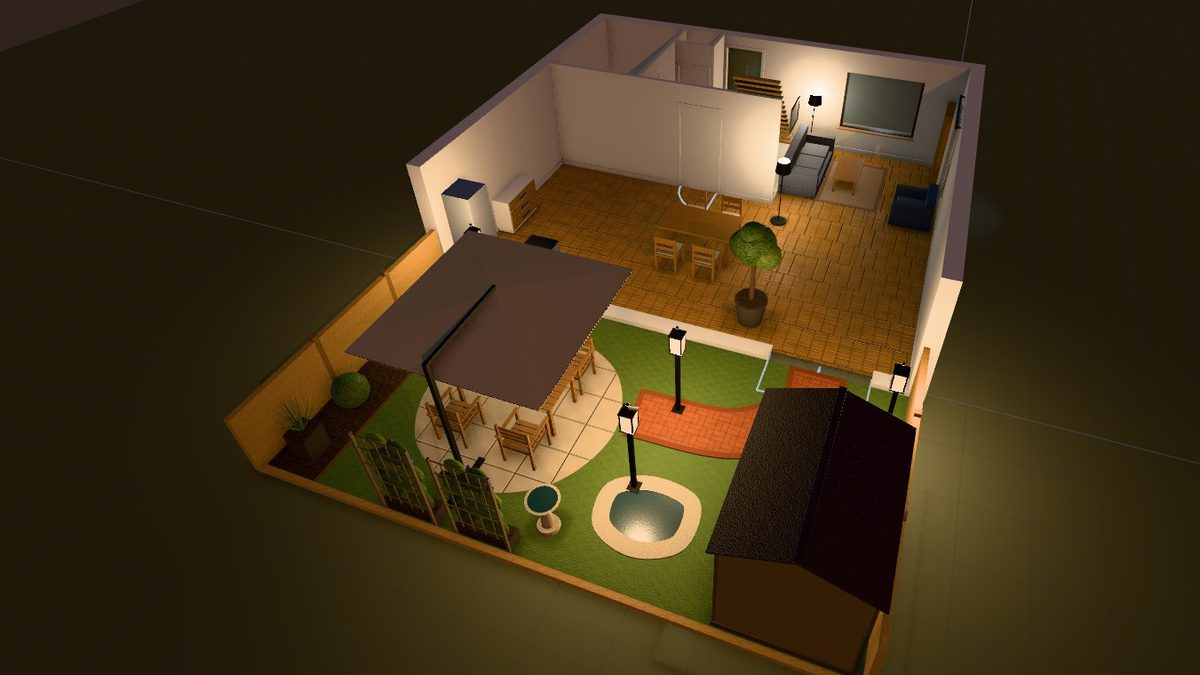
P takes a picture of whatever is on screen, without the controls. A day picture and an evening one from the same spot are an easy way to show someone else what you have in mind before the electrician comes.
What it is not
- It is not a lighting calculation. There are no lux figures, and a lamp is a lamp, not a particular bulb.
- A lamp's light casts no shadows; only the sun does.
- There is no time of day or compass. Evening is one setting, and the daytime sun comes from the side your windows face.
What it does is put each lamp at its real height and distance, in the room you will actually stand in. That is enough to tell a lamp that lights the chair from one that lights the wall behind it. If the garden is still a lawn, start with designing the garden.
Questions people ask
Can I see my garden lighting at night before I install it?
Yes, as a preview. Place the lamps in Duimstok and switch to Evening: the sky turns to dusk and the lamps you placed light the garden and the house. It is a visual check, not a lighting calculation.
How far apart should garden path lights be?
Every 2 to 3 m is a common spacing, set a little to one side of the path and alternating sides on a wide one.
How many lamps can I place?
As many as you like, but only the first eight light the scene. The rest are still shown with their glass glowing, and the app says so when you place one.