
Pool steps or a ladder? See how much pool each takes
Everyone needs a way in
In the brochure, people slide into the pool from the edge. In real life, a grandmother wants a step she can walk down holding a rail, a toddler wants to sit on one, and the person who swims lengths wants nothing in the way at all. The builder offers three ways in: straight steps, Roman steps or a ladder. Each one takes a different piece of your pool.
On a small pool that piece is not small. Here are all three in the same pool, measured, built in Duimstok so you can stand beside them before anyone orders them.
The pool: 5.4 × 2.4 m of water
The pool sits along the lawn of the 9.10 × 4.80 m back garden we use for every example: 6.00 × 3.00 m with its 30 cm stone coping, so 5.40 × 2.40 m of water, 12.96 m² of surface. It has a shallow end of 1.0 m by the deck and a deep end of 1.8 m by the back fence.
Straight steps: 1.8 m wide, 1.2 m into the water
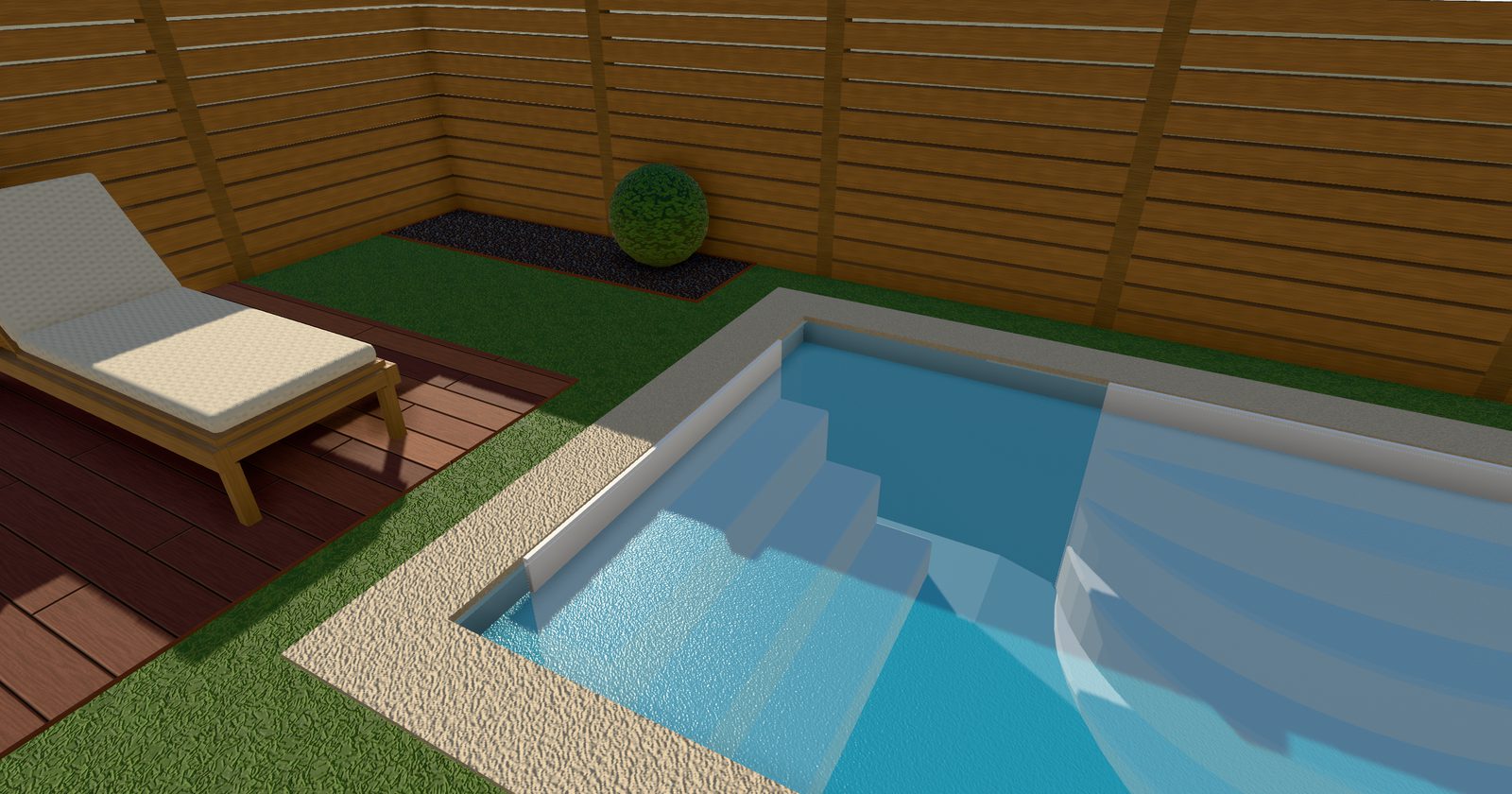
Drop-in steps hang against the pool's wall, with only a 10 cm flange on the dry side under the coping. In Duimstok they have four treads, each 30 cm deep and 30 cm lower than the one above, the top one 30 cm under the ground. Four treads of 30 cm reach 1.2 m out into the water.
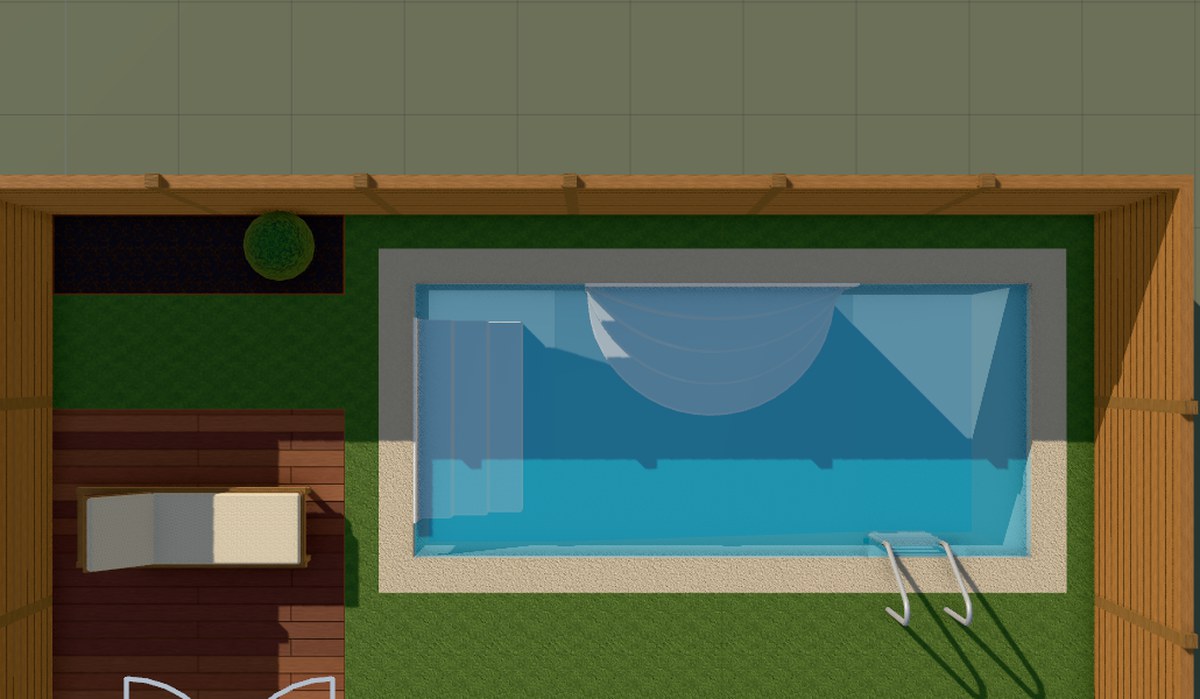
Straight steps are 1.8 m wide. Across the 2.4 m shallow end of this pool they leave 30 cm at each side, and they take 1.8 × 1.2 = 2.16 m², a sixth of the surface. They also take length: from the bottom step to the far wall there is 4.2 m of water left to swim, not 5.4 m.
In return they are the easiest way in, and the top steps are a place to sit in the water.
Roman steps: a half-round 2.4 m across
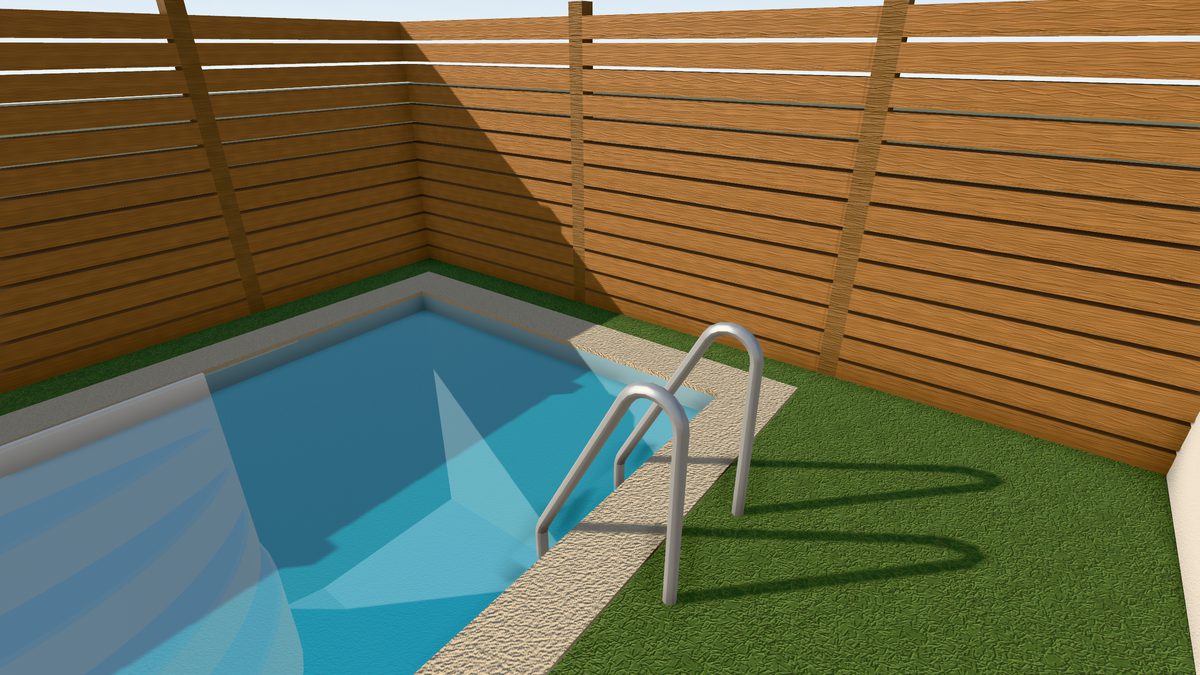
Roman steps have the same four treads, but each one curves out from the wall, and the bottom one is a half circle. They are 2.4 m along the wall and still reach 1.2 m into the pool.
On this pool they do not fit across the shallow end: it is exactly 2.4 m wide, with no room left at the sides. So they go on a long side, in the middle. There they keep the full length free for swimming, but at the steps the pool is only 1.2 m wide.
A ladder: almost nothing in the water
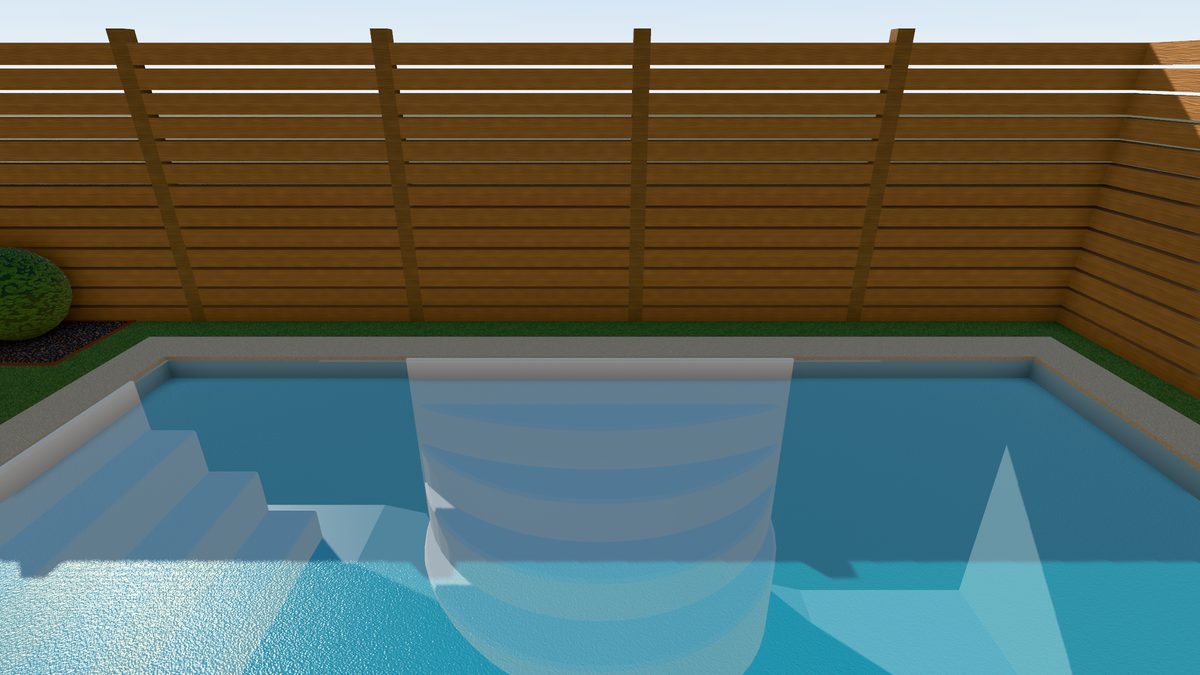
A pool ladder has two steel rails set in the deck behind the coping, turning over the edge and down the wall, with treads between them in the water. The whole thing is 59 cm wide and 64 cm from front to back, and part of that is on the coping. It takes almost nothing from the pool.
What it asks is that you climb. At the deep end, where nobody can stand, a ladder is often the only way in that makes sense, and many pools have steps at the shallow end and a ladder at the deep end.
Which one for your pool?
- A pool of 2.4 m wide or less: straight steps at the shallow end, or a ladder. Roman steps fit only on a long side, since they need a wall longer than 2.4 m.
- A mini pool, say 4.3 × 2.3 m of water: straight steps across the end leave about 3.1 m to swim. Measure that before you decide steps are worth it.
- Someone who needs a rail and a gentle way in: steps. A ladder is a climb.
- Someone who swims lengths: steps on a side, or a ladder, so the full length stays clear.
- A deep end nobody can stand in: add a ladder there, whatever you choose at the shallow end.
Stand beside them before you choose
In Duimstok the steps and the ladder hang themselves at the edge: drag them to the side of the pool and they turn to face the water and drop into place. Then press Walk and stand on the coping. You see the steps under the water from where you would get in, and how much of the pool is left.
Try it
- Open your plan with a pool in it, press O for the view from above and open Catalog.
- Search for pool steps and pick Pool Steps, Straight or Pool Steps, Roman.
- Drag them to a side of the pool until they hang at its edge.
- Search for ladder and hang an In-ground Pool Ladder at the deep end the same way.
- Press Walk and look at them from the coping.
Limits worth knowing
- The steps come in two widths, 1.8 m straight and 2.4 m Roman, with four treads of 30 cm.
- The pieces are drawn for an in-ground pool's straight wall; Duimstok does not draw a beach entry or built-in steps cast with the pool.
- It does not say which way in is right for a particular person; ask your builder.
Questions people ask
How much room do pool steps take?
Drop-in steps with four treads of 30 cm reach 1.2 m into the pool. Straight ones 1.8 m wide take 2.16 m² of water; Roman ones are 2.4 m along the wall.
Are Roman steps bigger than straight steps?
They are wider along the wall, 2.4 m against 1.8 m, but reach the same 1.2 m into the water. They need a wall longer than 2.4 m.
Can a pool have steps and a ladder?
Yes, and many do: steps at the shallow end to walk in, a ladder at the deep end to climb out where you cannot stand.