
Dry stone or mortared: which stone retaining wall?
The client points at a photo on their phone
You quote a stone retaining wall for the back of the garden. The client nods, then shows you a photo from a holiday: a wall with deep shadowed joints and no mortar in sight, or a tidy one with a row of stones standing on edge along the top. Which one did you price? They are not the same wall, not the same build and not the same day rate.
A stone wall is chosen by eye, so the cheapest moment to settle it is before you order the stone. This post sets out the four ways a stone retaining wall is usually finished, what changes on site with each, the numbers for a real 60 cm bank, and how to show all four to the client in their own garden with Duimstok.
Four walls on the same bank
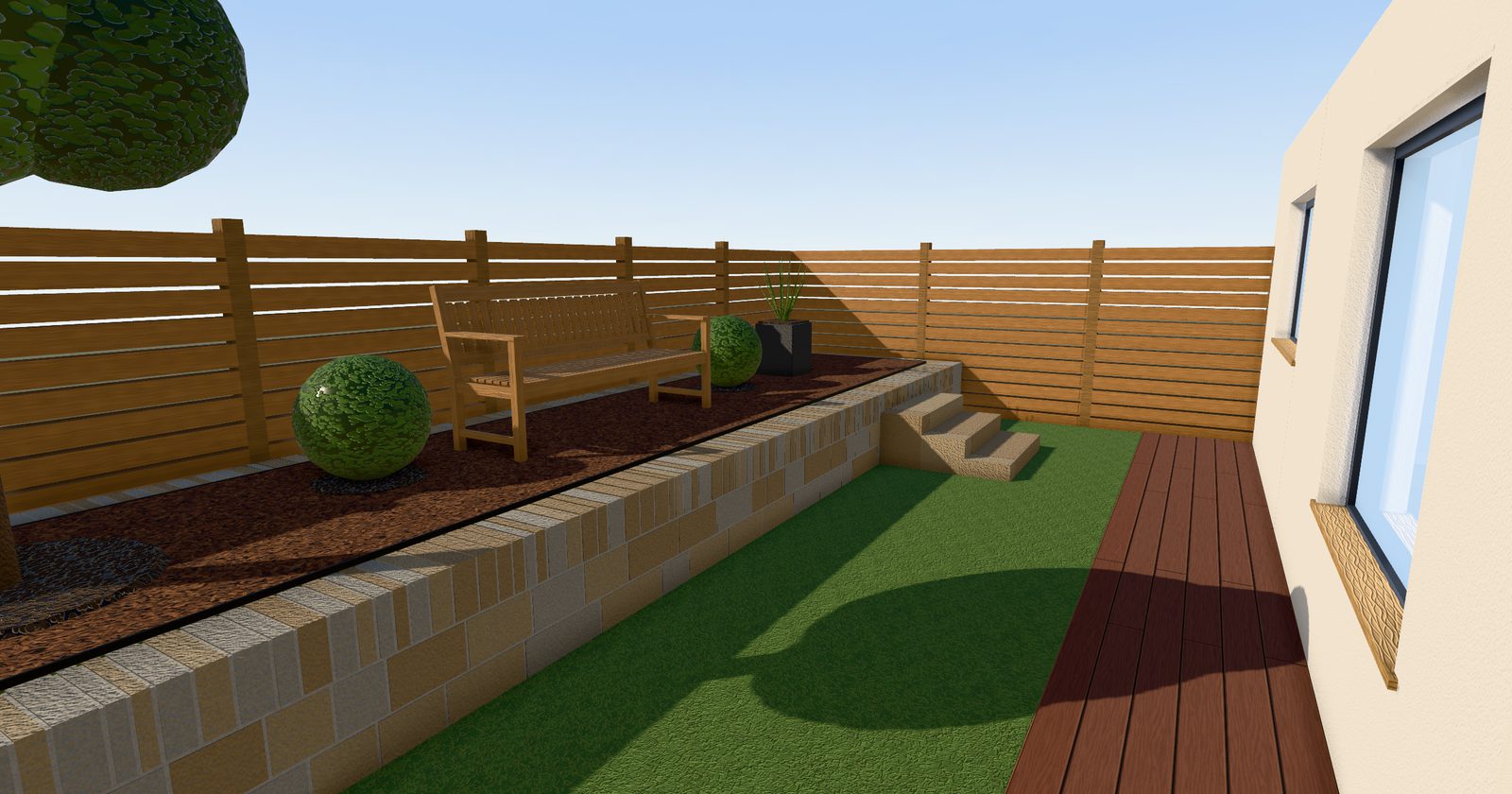
The pictures below are one garden: a bank across the back, 9.10 m long, 2.10 m deep and 60 cm high, with a flight of stone steps. Only the wall changes.
- Dry stone: laid without mortar, the joints recessed and dark. It reads as rural and soft, and water drains out through it.
- Dry stone with cope stones: the same, finished with a course of stones on edge across the full thickness, as most dry stone walls are topped.
- Mortared stone: the joints filled nearly flush. Tidier and more formal; behind it you need a way for water to get out.
- Mortared stone with cope stones: the formal wall with a clean edge on top, the one in the main picture.
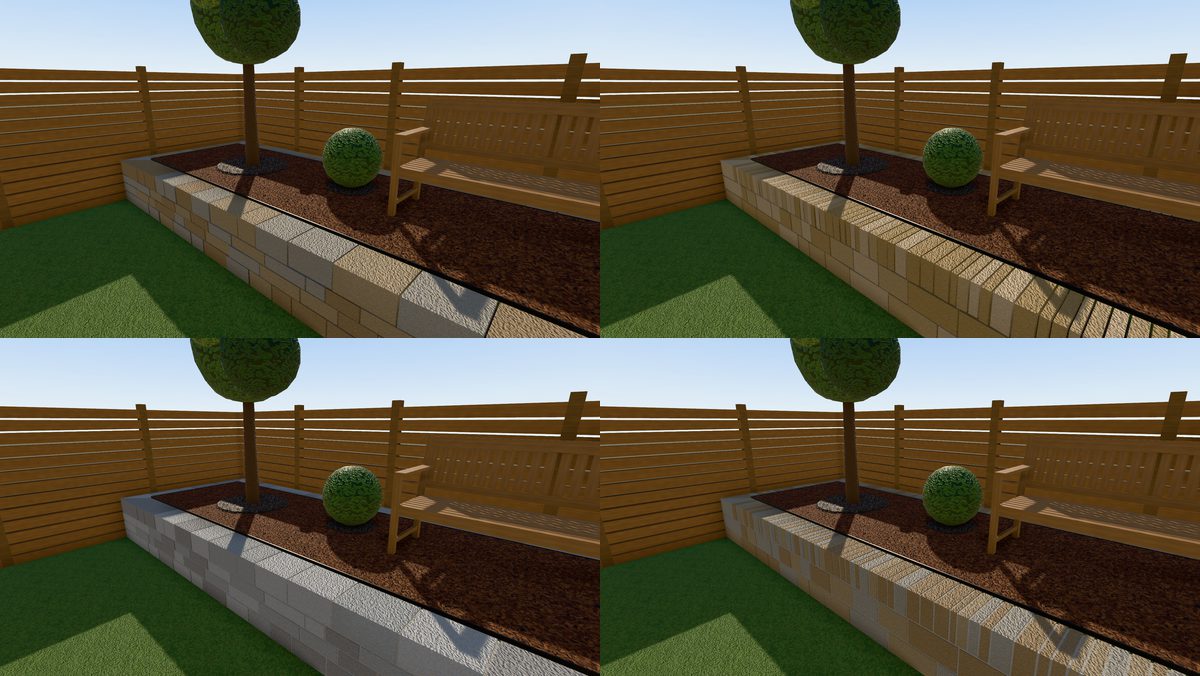
Each comes in four colours in Duimstok, Mixed, Yellow, Grey and Dark grey, so the photo on the client's phone usually has a near match.
Count the stone for the 60 cm bank
The walls are drawn as they are commonly built: 30 cm thick, in courses about 14 cm high, cope stones 22 cm high and about 8.5 cm along the wall. For the front of this bank:
- Face: 9.10 m × 0.60 m = 5.46 m² of wall to the lawn.
- Volume: 5.46 m² × 0.30 m = 1.64 m³ of wall. Your supplier converts that to tonnes for their stone.
- Cope stones: 1 m ÷ 8.5 cm is about 12 per metre, so about 107 along 9.10 m.
- Courses: without a cope, about four courses of 14 cm; with one, the cope takes 22 cm and leaves under three courses below it.
The cope is not only a finish. On a 60 cm wall its flat top is a perch a little above chair height, which changes how the lawn in front is used. That is worth showing, not describing.
What changes on site
A dry wall is slower to lay well and needs a waller who can pick and fit stone; it needs no mortar and lets water through. A mortared wall needs a footing and drainage behind it, and the pointing is a day of its own. Past about a metre of drop, have the wall designed by an engineer and think about a railing, whichever you choose.
Show it, then switch it
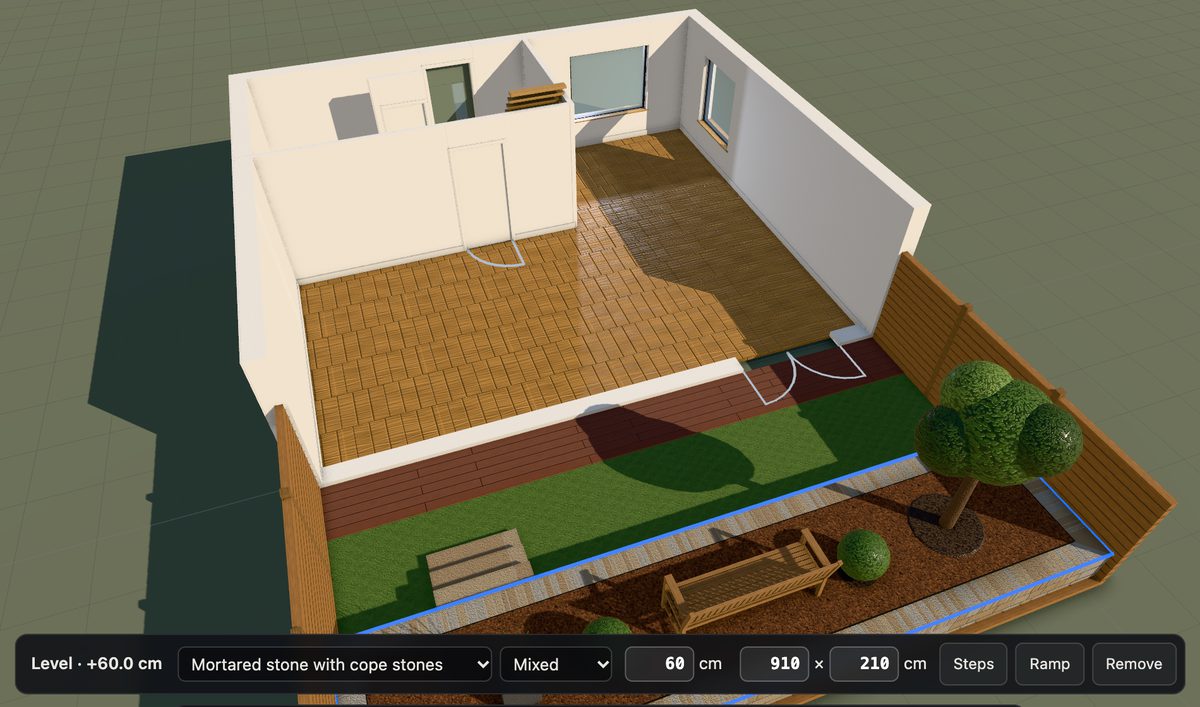
Select the bank and the bar reads Level · +60.0 cm, with the wall type and its colour in two menus, the height and the size, 910 × 210 cm. Change the menu from Mortared stone with cope stones to Dry stone while the client watches, and the wall is rebuilt in place. Then walk them along it.
Try it
- Press O for the view from above, then Level on the toolbar.
- Type the height, for example 60 cm, and press T until the Retaining wall menu shows the stone wall you want.
- Drag out the bank, or click once and type its size.
- Pick Mixed, Yellow, Grey or Dark grey in the colour menu.
- Press Steps and click the side the steps go on, then press Walk.
Limits worth knowing
- Duimstok does not count the stone or the cope stones for you; the sums above are yours.
- It draws the wall, not its footing, drainage or backfill.
- The walls are upright; a battered dry stone wall that leans back is not drawn.
Questions people ask
Is a dry stone or a mortared retaining wall better?
Neither in general. Dry stone drains through its joints and suits a rural garden; mortared stone is tidier and more formal but needs a footing and drainage behind it.
How many cope stones do I need per metre?
With stones about 8.5 cm along the wall, about 12 per metre. Measure your own stone and divide 100 cm by it.
How thick should a stone retaining wall be?
For a low garden wall, 30 cm is a common thickness. A higher wall should be designed for its height and soil.