
A drive that is also a terrace: which surface?
One yard, two jobs
On a French building forum this autumn, someone was levelling a yard of about 7.5 to 9 m wide and 6 to 9 m deep. On weekdays it had to take two electric cars. At weekends the family meals run to twenty people or more, and the table would stand on the same ground. Grass pavers, exposed concrete, slabs or stabilised gravel: which one does both?
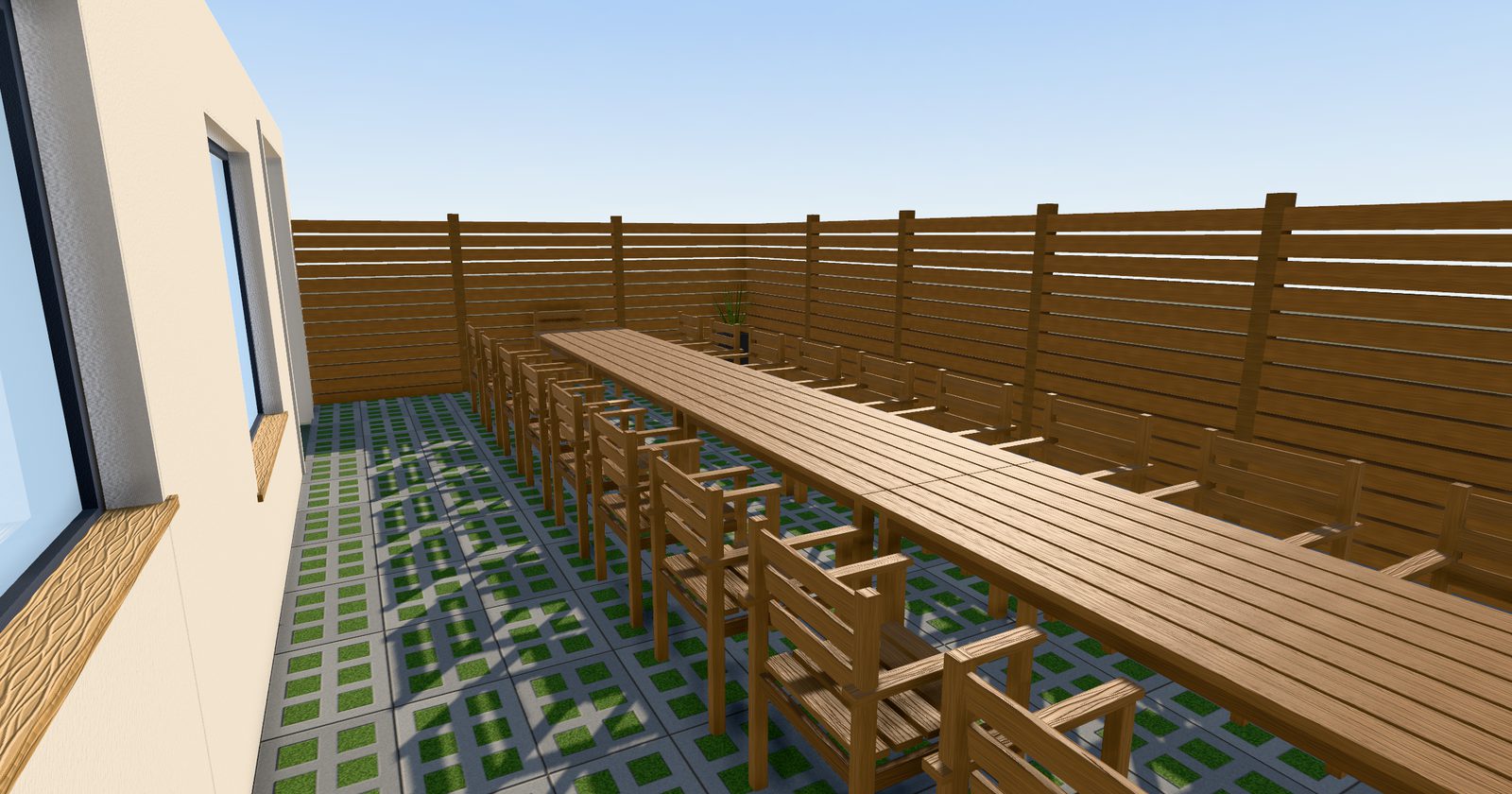
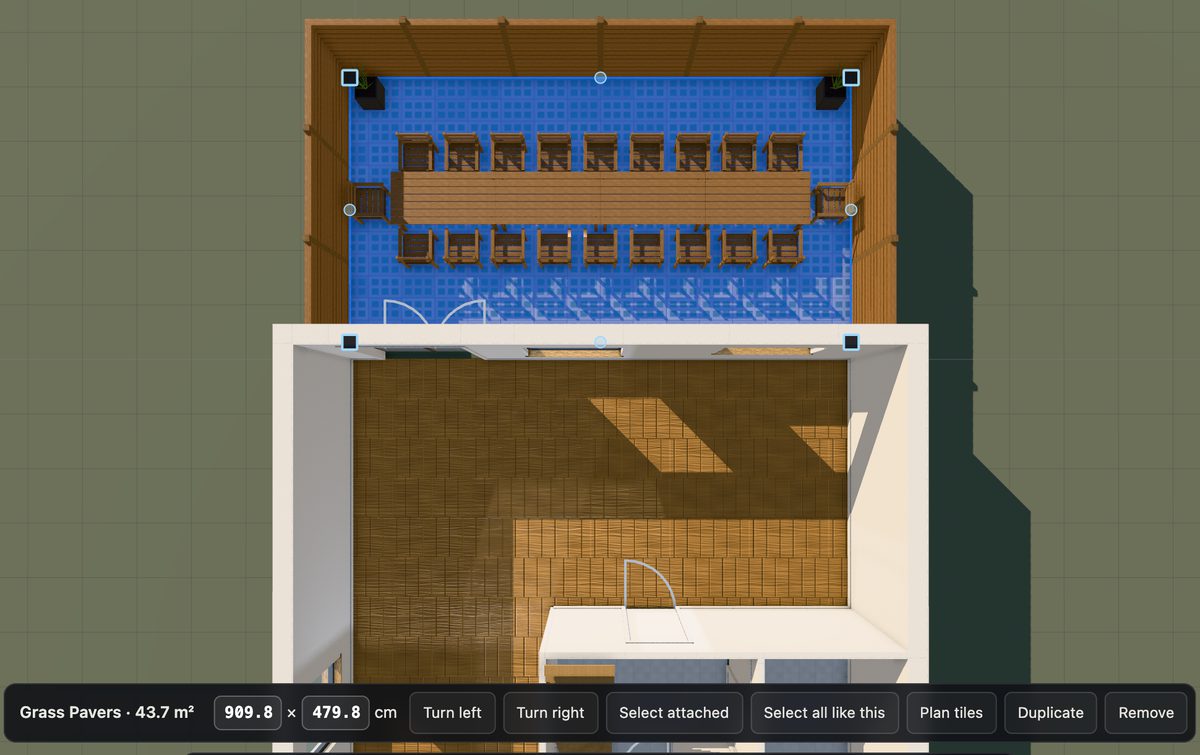
The surface is only half the question. The other half is whether two cars and a table for twenty fit in that space at all, and what a chair does on each surface. This post works through both, with a garden of 9.10 × 4.80 m built in Duimstok.
The sizes: two cars, then twenty chairs
A parking space is usually taken as 2.50 × 5.00 m. Two side by side need 5.00 m of width, and a little more if both drivers want to open their doors fully: plan on 5.50 m. Ten metres of depth would park them nose to tail, but side by side 5 m is enough.
A table for twenty takes more length than people expect. Each place needs about 60 cm of table edge, and a chair needs about 85 cm from the table edge to pull out, sit down and get up again. Four garden tables of 1.80 × 0.90 m end to end make a table 7.20 m long. With nine chairs down each side and one at each end, that is twenty places, and the whole group needs about 8.2 × 2.6 m of flat ground.
So the table, not the cars, decides the width. A yard of 7.5 m fits two cars easily but not this table along its width; it would have to run the long way, which needs 8.2 m of depth.
Three surfaces, the same table
Here the same yard is laid three ways, with the same table on each. Grass pavers are a concrete grid, 60 × 40 cm, with grass growing in its holes. Concrete pavers are a closed, flat surface. Gravel is the loose version of stabilised gravel; the stabilising grid underneath does not show from above.
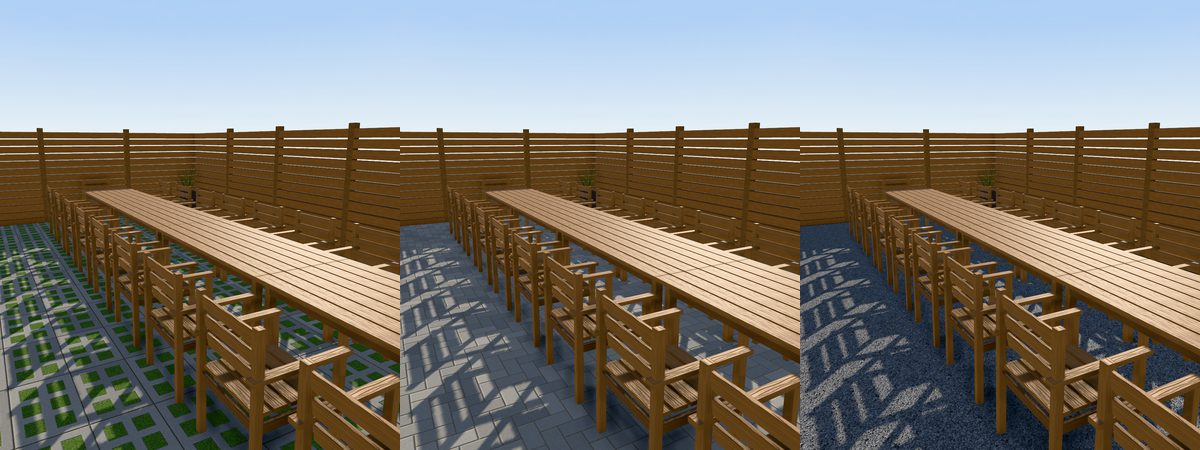
What a chair does on each one
This is where a dual-use yard is won or lost. A car spreads its weight over four wide tyres. A chair puts it on four legs of about 4 cm, and a table leg does the same.
- Grass pavers carry a car well and keep the yard green and draining. But the holes are wider than a chair leg, so a chair rocks, and a table leg can drop into a hole and tip. They suit the parking half best.
- Concrete pavers are the easiest for chairs and tables, and they are the surface most often laid for a drive. They are also the most closed: the rain has to go somewhere else.
- Stabilised gravel drains and takes a car, and a chair sits steady on it if the gravel is well bound into its grid. Loose on top, it gets pushed around under chairs and tyres alike.
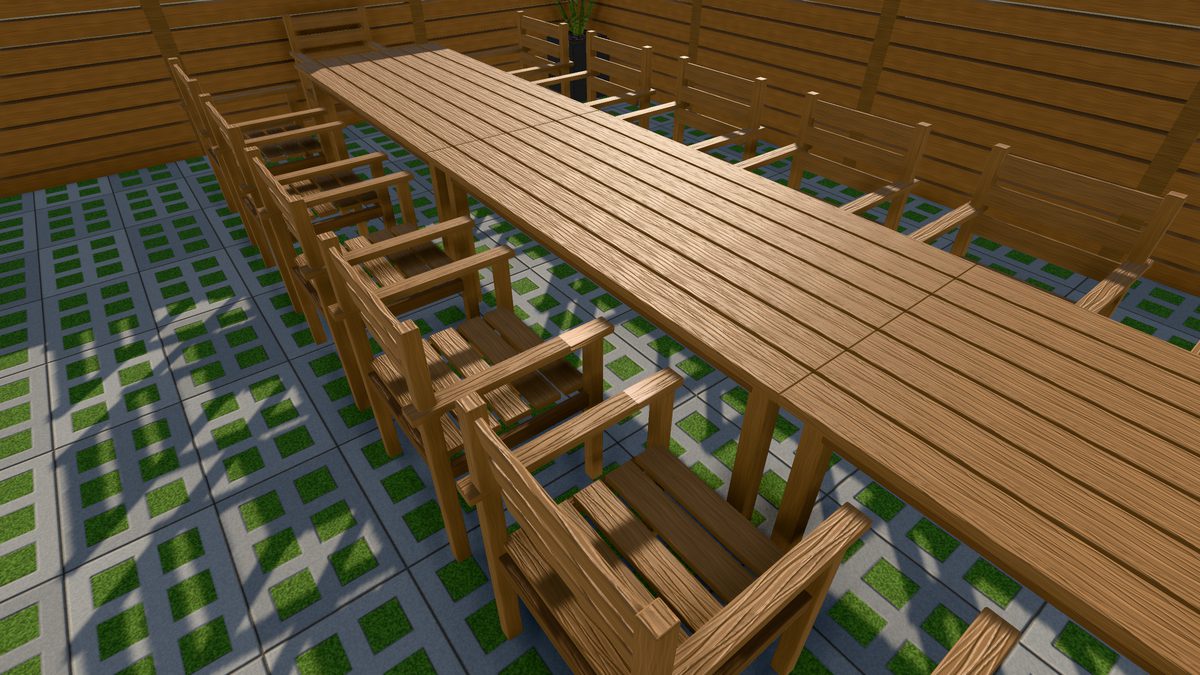
A common answer is to split it: closed paving where the table stands and the wheels run, grass pavers or gravel at the sides. That is a design decision, and it is easier to make when you can see the line between the two at your own eye height.
Try it
- Press Top for the view from above, open Catalog and search for grass pavers.
- Choose Grass Pavers, press Fill and click the yard: it is laid wall to wall, and the bar shows its size and m².
- Place Patio Dining Table four times end to end, and the chairs round it.
- Click the paving and type a smaller size to split the yard, then fill the rest with another covering.
- Press Walk and stand where the cars would be.
Limits worth knowing
- Duimstok has no cars in its catalog: mark the bays with the paving itself or measure them with Measure.
- It shows a surface; it does not tell you what sub-base or thickness a drive needs. Ask the supplier.
Questions people ask
How much space do two cars need side by side?
About 5.00 × 5.00 m, from two bays of 2.50 × 5.00 m. Allow 5.50 m of width to open the doors comfortably.
Can you put garden furniture on grass pavers?
You can, but chairs rock and table legs can drop into the holes. Put the table on closed paving and keep the grass pavers for where the cars stand.
How much space does a table for 20 need?
About 7.20 m of table and 8.2 × 2.6 m of ground with the chairs pulled out, at 60 cm a place and 85 cm from the table edge for each chair.