
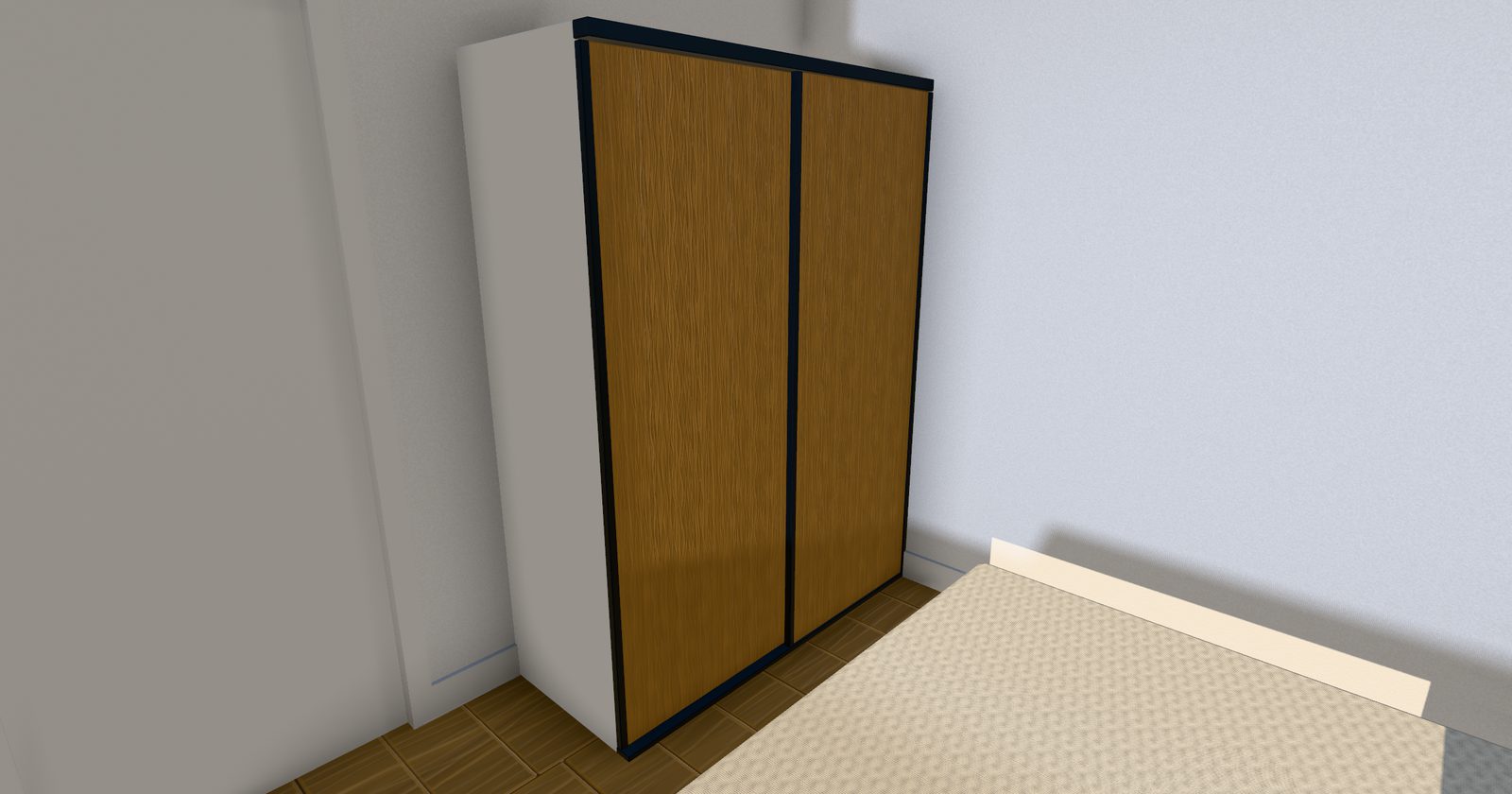
Sliding or hinged wardrobe: which fits the bedroom?
The door that stops at the bed
The wardrobe arrives, it is built, it stands exactly where the drawing said, and the first time someone opens it the door stops against the bed. Not hard, just enough that every morning starts with a door half open and a sideways reach for a shirt. The wardrobe fitted the wall. Nobody checked whether its doors fitted the room.
Whether you need sliding or hinged doors is a question about one number: the gap in front of the wardrobe. Here it is worked out in a small bedroom in Duimstok.
The room: 3.00 by 3.40 metres
The bedroom is 3.00 by 3.40 m on its wall lines, 2.90 by 3.30 m inside, with the door in one end wall and a window in a side wall. A 160 × 200 cm bed stands with its head against the far wall; its frame is 167 cm wide and 208 cm long. That leaves 1.22 m between the foot of the bed and the wall with the door, and that wall, beside the door, is where the wardrobe wants to go.
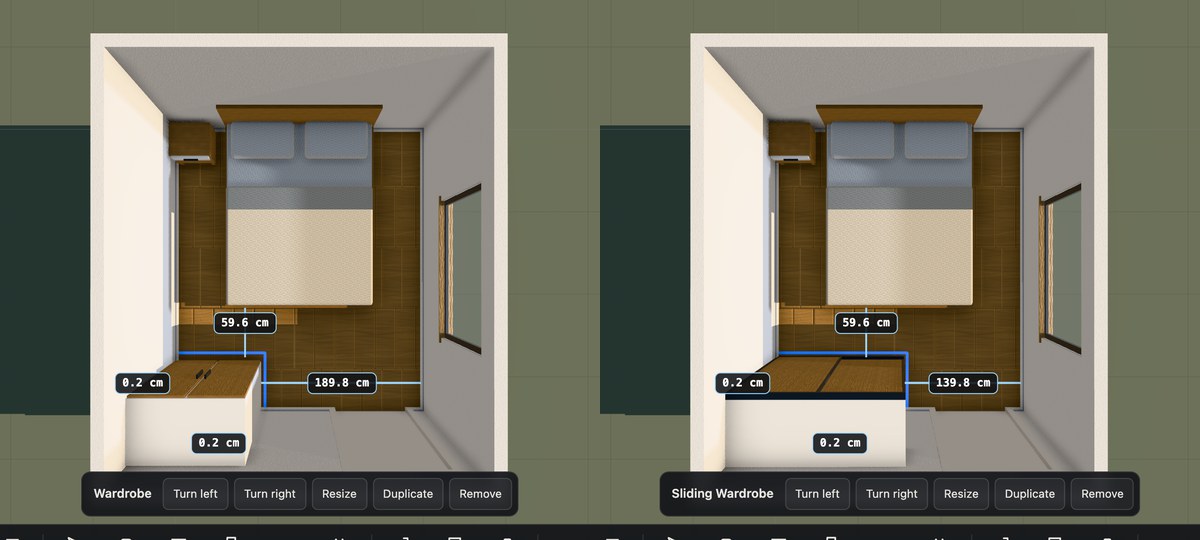
A wardrobe is 62 cm deep with its doors and handles. Put one on that wall and the gap readings say what is left: 59.6 cm from the wardrobe front to the foot of the bed.
Hinged doors: 49 of the 60 cm
A two-door wardrobe 1.00 m wide has two doors of about 49 cm each. Open, each door swings out its own width, so it sweeps 49 of the 59.6 cm and stops 11 cm short of the bed. It opens, but only from the side: there is no room to stand in front of a door while it swings past you, and nobody gets along the foot of the bed while one is open.
That is the problem in the opening story, and you can see it coming in the readings before anything is bought.
Sliding doors: the 60 cm stays 60 cm
A sliding wardrobe needs nothing in front of it. Its panels move along the front, so the full 59.6 cm stays free whether it is open or shut: enough to stand in, and to walk past someone standing there.
It costs you reach, not floor. With two panels only half the wardrobe is open at once, so on a 1.50 m wardrobe you get at 75 cm at a time. In return it is half a metre wider than the hinged one on the same wall: 1.50 m of hanging rail against 1.00 m.
Or move the hinged one
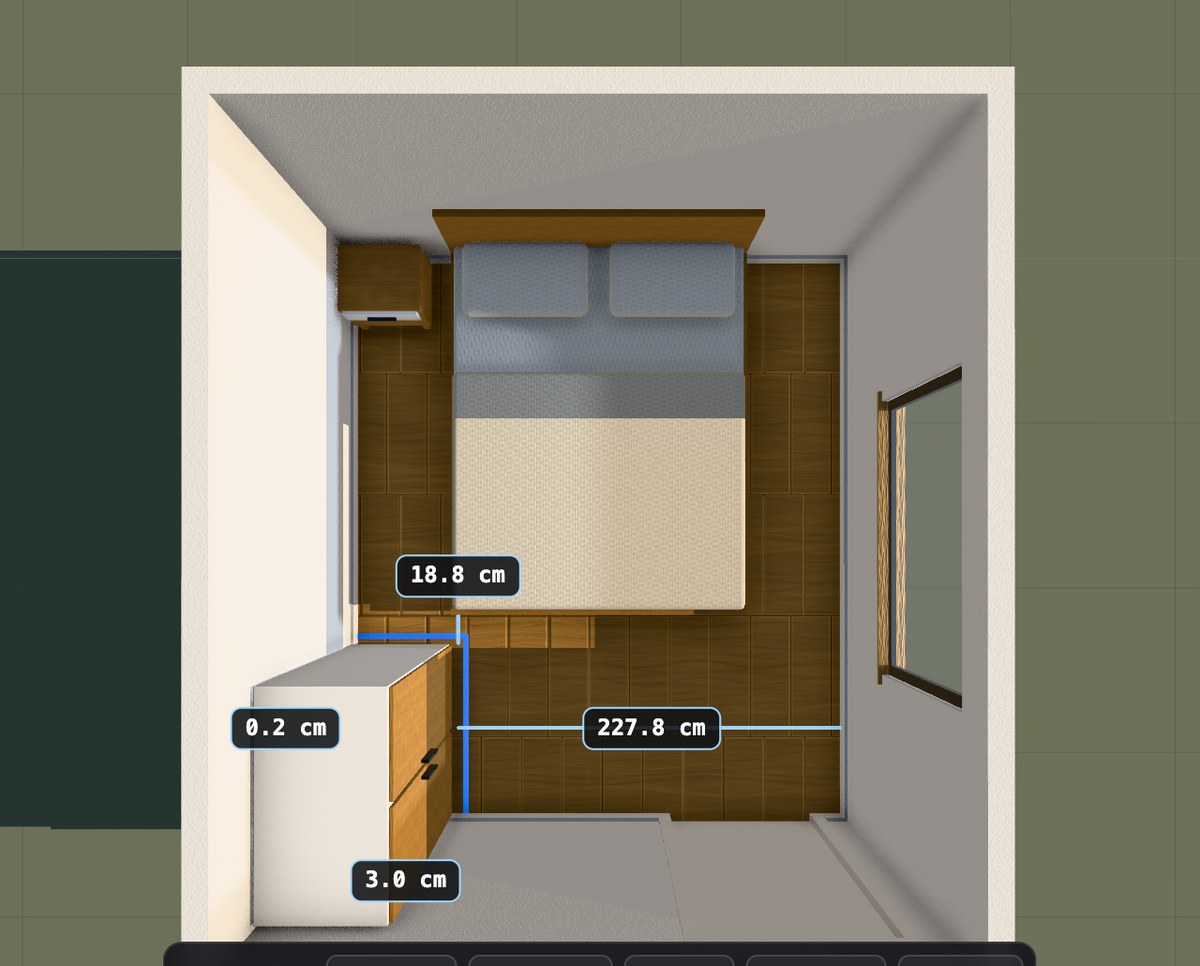
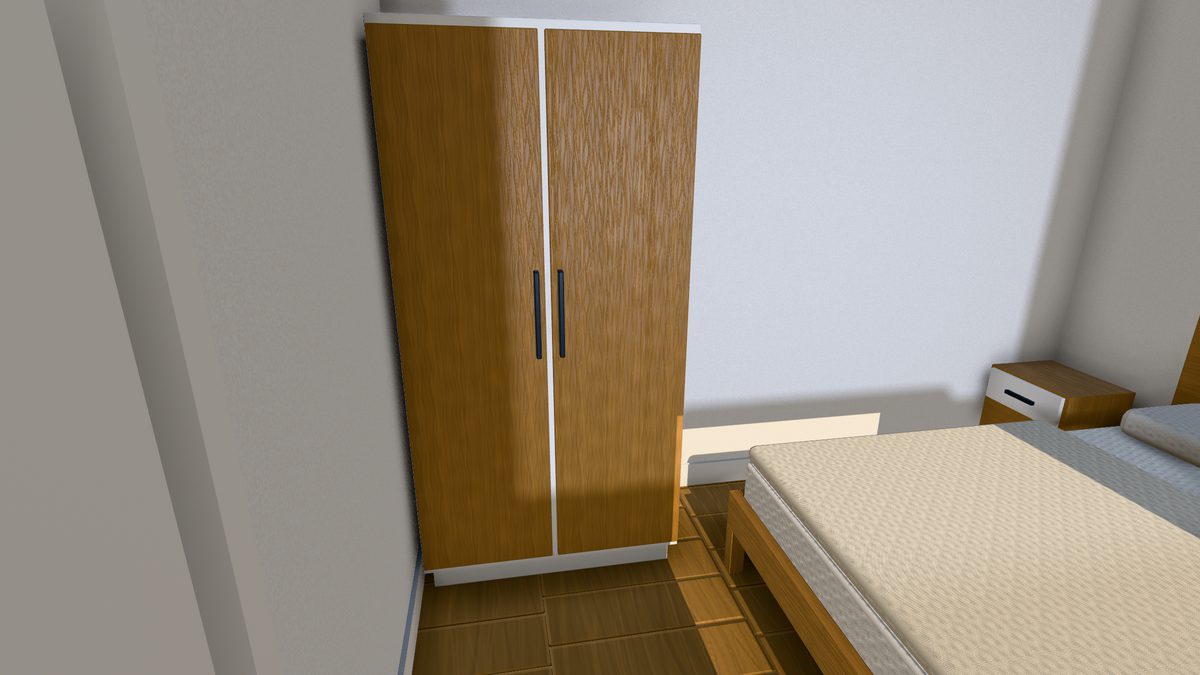
If you prefer hinged doors, give them somewhere to swing. Turned onto the side wall, its back to the wall just past the foot of the bed, the same wardrobe stands 18.8 cm from the bed's corner and faces 2.28 m of open floor. Its doors open into the room, not into the gap, and the wall facing the bed stays free for a chest of drawers or nothing at all.
Try it
- Open your bedroom's plan, or draw it, and press O for the view from above.
- Open Catalog and place your bed; search for bed frame to pick its size.
- Search for wardrobe and place Wardrobe or Sliding Wardrobe where you want it; it turns its back to the wall when you bring it close.
- Select it and read the gap in front of it. Click a reading to type the gap you want, and the wardrobe moves to make it.
- Press Resize to give it the width and depth of the one you are buying, then double-click the floor and walk in.
Limits worth knowing
- Duimstok draws the swing of a room's doors, not of a wardrobe's. Read the gap and compare it with the door width of the wardrobe you are buying.
- The wardrobes are fixed models you can resize; the number and width of their doors stay as built.
Questions people ask
How much space do you need in front of a wardrobe?
For hinged doors, at least the width of one door, plus room to stand beside it as it opens. For sliding doors, only the room you want to stand and walk in.
Can a wardrobe go at the foot of the bed?
Yes, if the gap is wide enough for its doors. With about 60 cm, sliding doors work and hinged doors of 49 cm only just open.
Are sliding wardrobes better for small bedrooms?
They save the floor in front, but open only half at a time. Where there is room for the doors to swing, a hinged wardrobe opens fully.