
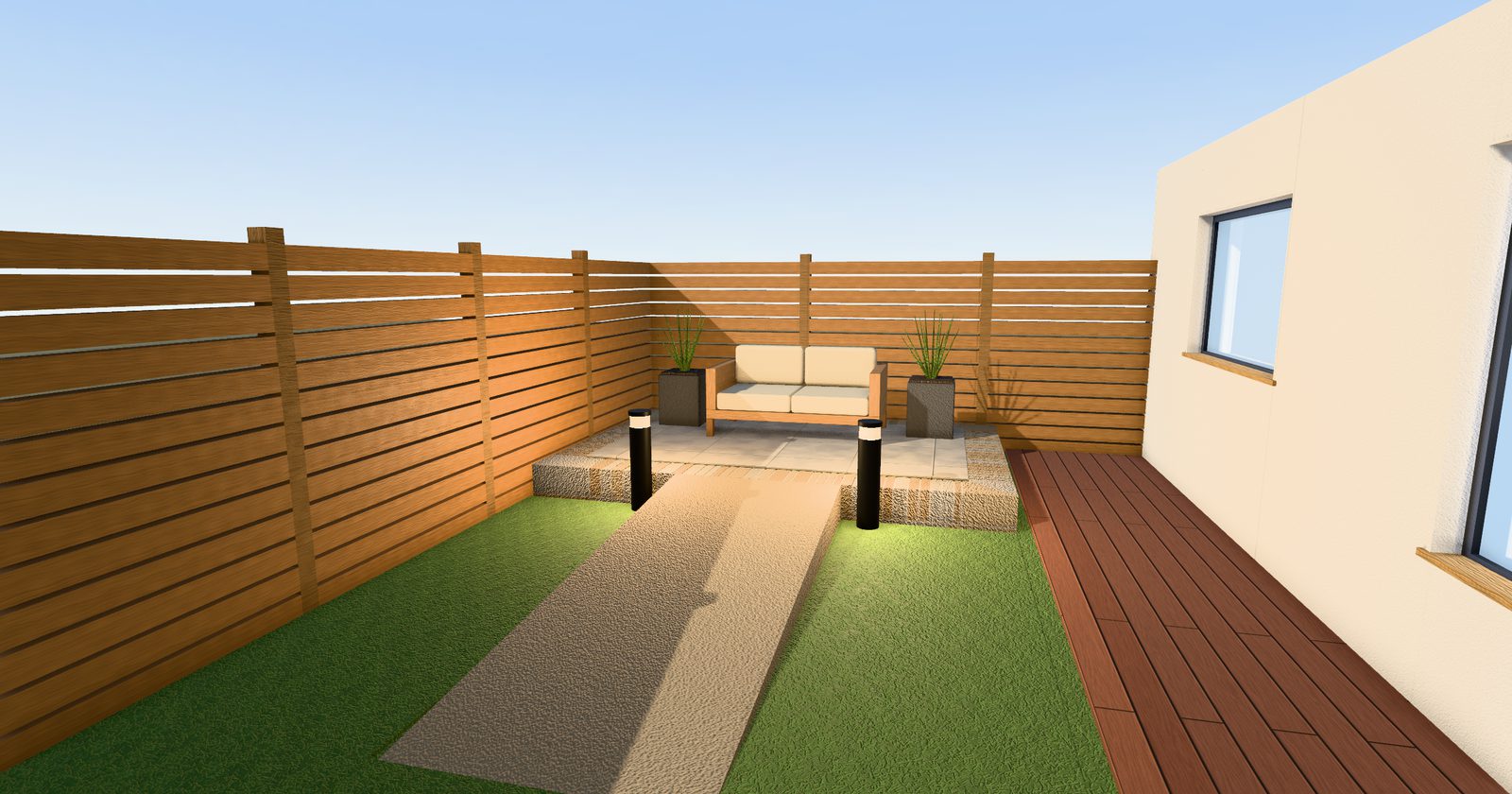
How long should a garden ramp be? Do the sum first
Two steps that turn out to be two too many
The terrace at the end of the garden is only 25 cm up: two small steps. Then a parent comes to stay with a walker, the mower has to go up every week, and a pushchair bumps up and down every afternoon. Someone says: why not a ramp? And nobody knows whether it would be one metre long or five.
The answer is a sum you can do on the back of an envelope. This post works it through for real heights, shows where the length goes in a small garden, and shows how to try a ramp beside your own lawn in Duimstok before anyone mixes a bag of concrete.
Length is the rise times the gradient
A gradient of 1:12 means one centimetre up for every twelve along. So the length of a ramp is simply the height it climbs times the second number:
- 1:20, gentle: 25 cm × 20 = 5.00 m.
- 1:12, standard: 25 cm × 12 = 3.00 m.
- 1:8, steep: 25 cm × 8 = 2.00 m.
The same 25 cm by steps is two risers of 12.5 cm and one tread: about 35 cm of garden. That is the real trade. A ramp takes eight times the ground of the steps it replaces, at the gradient most guides give for a garden ramp.
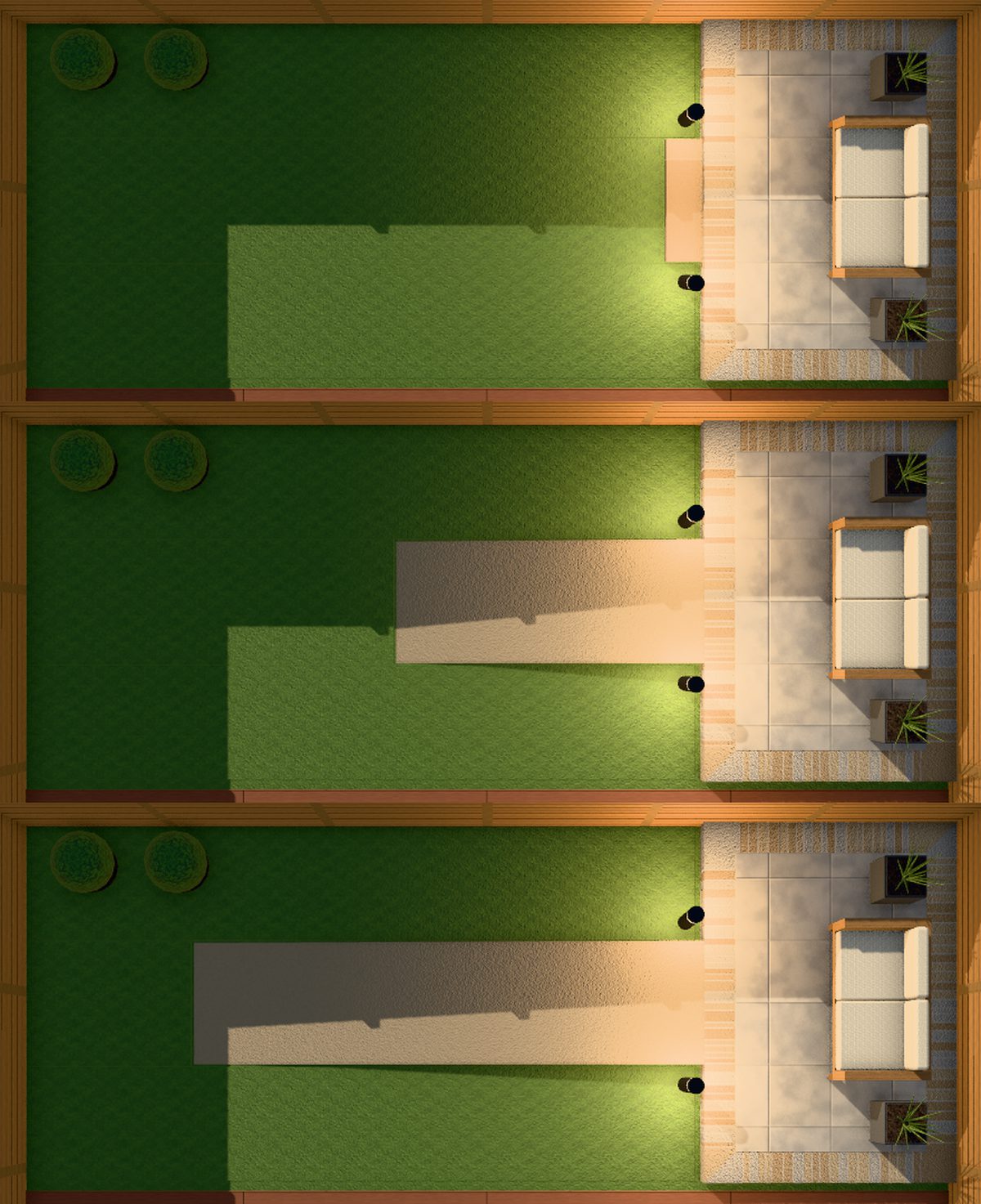
Which gradient for which job
1:12 is the steepest gradient that most accessibility rules allow for a ramp of any height, and garden guides give the same for a loaded wheelbarrow or a mower. 1:20 is the one to aim for when someone will use it every day in a wheelchair or with a walker, and there is room. 1:8 is only sensible over a kerb-high step, about 15 to 19 cm; above that it is steeper than most rules allow.
Two more numbers matter. The ramp wants free, level ground at its foot to arrive on and turn: allow about 1.2 m. And most rules want a landing part way up once a ramp climbs more than about 75 cm. Local rules differ, so check yours if the ramp is for a wheelchair user.
Higher terraces: where the length runs out
The sum gets serious quickly. A terrace 45 cm up needs 5.40 m at 1:12 and 9.00 m at 1:20. In a garden 9 m wide, that gentle ramp is the whole width of the garden, before you add the 1.2 m to arrive on.
So the question is often not "steps or a ramp" but "where can 5 m go". Along a fence, beside a path the ramp can share, or turning at a landing. Those are things you see far better standing in the garden than on a plan.
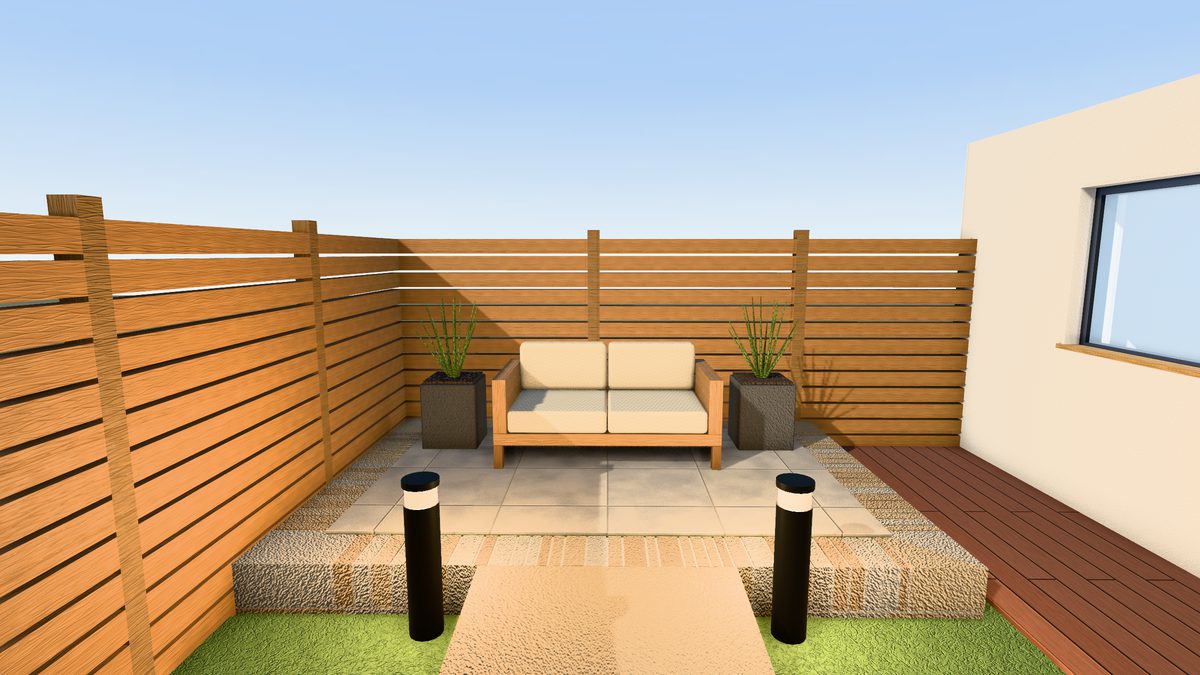
See it in your own garden first
In Duimstok a ramp is a flight like steps, laid on a level's side. Choose its gradient and it works out the length for you: the bar reads Ramp · 1:12 · 3.00 m long, and the ramp is drawn across your lawn at that length. Switch it to 1:20 Gentle and it grows to 5 m; you see at once whether it hits the shed. Then double-click the lawn and walk up it at your own eye height.
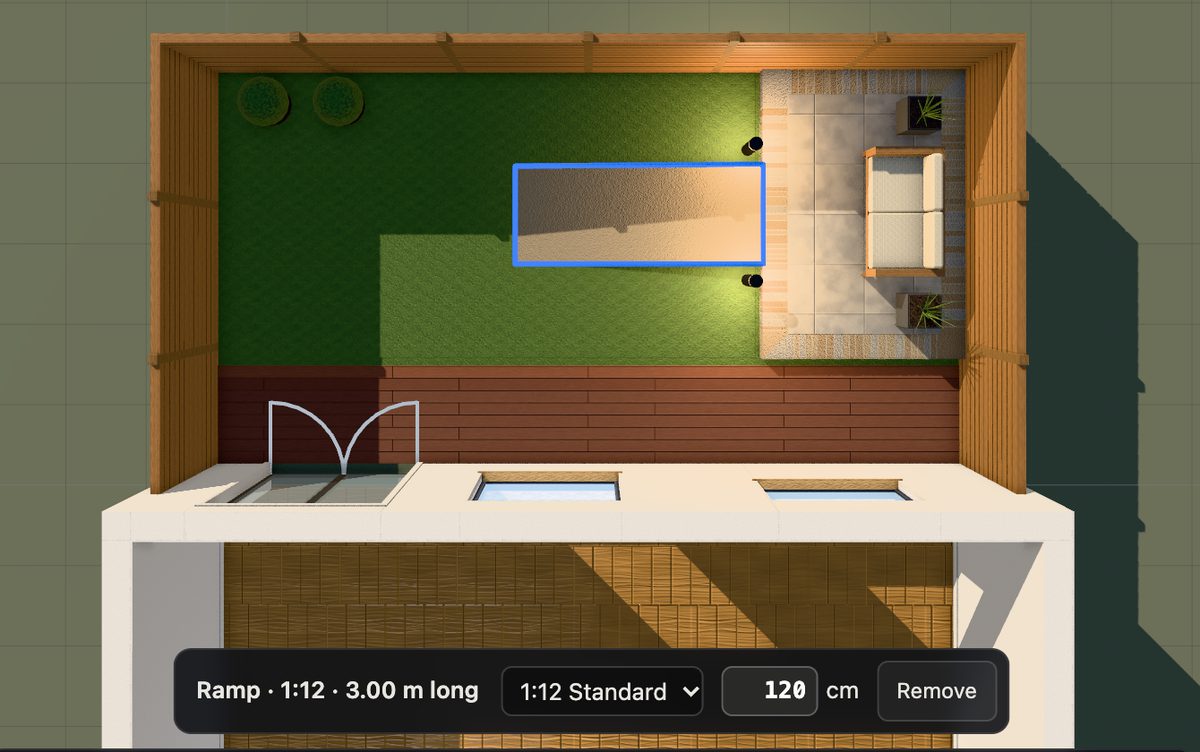
Try it
- Press O for the view from above, then Level on the toolbar, and draw the terrace with its height, for example 25 cm.
- Click the terrace and press Ramp, then click the side the ramp should leave from.
- Pick 1:20 Gentle, 1:12 Standard or 1:8 Steep in the menu, and type the width, for example 120 cm.
- Press Steps instead on the same side to compare the two.
- Double-click the lawn and walk up it.
Limits worth knowing
- Duimstok draws the ramp and its length; it does not draw handrails or kerbs along it.
- You cannot lay paving or decking on the ramp itself.
- It does not check your local building or accessibility rules; it uses the gradients above.
Questions people ask
How long should a ramp be for 25 cm?
At 1:12, 3 m. At a gentler 1:20, 5 m. Add about 1.2 m of level ground at the bottom.
What is the best gradient for a garden ramp?
1:12 is the usual steepest for a ramp people walk or push things up; 1:20 is easier for a wheelchair over a longer run. 1:8 is only for a step of kerb height.
How do I work out a ramp's length?
Multiply the height it climbs by the gradient's second number: 45 cm at 1:12 is 45 × 12 = 540 cm.