
How big should a barbecue corner be?
The barbecue stands where it landed
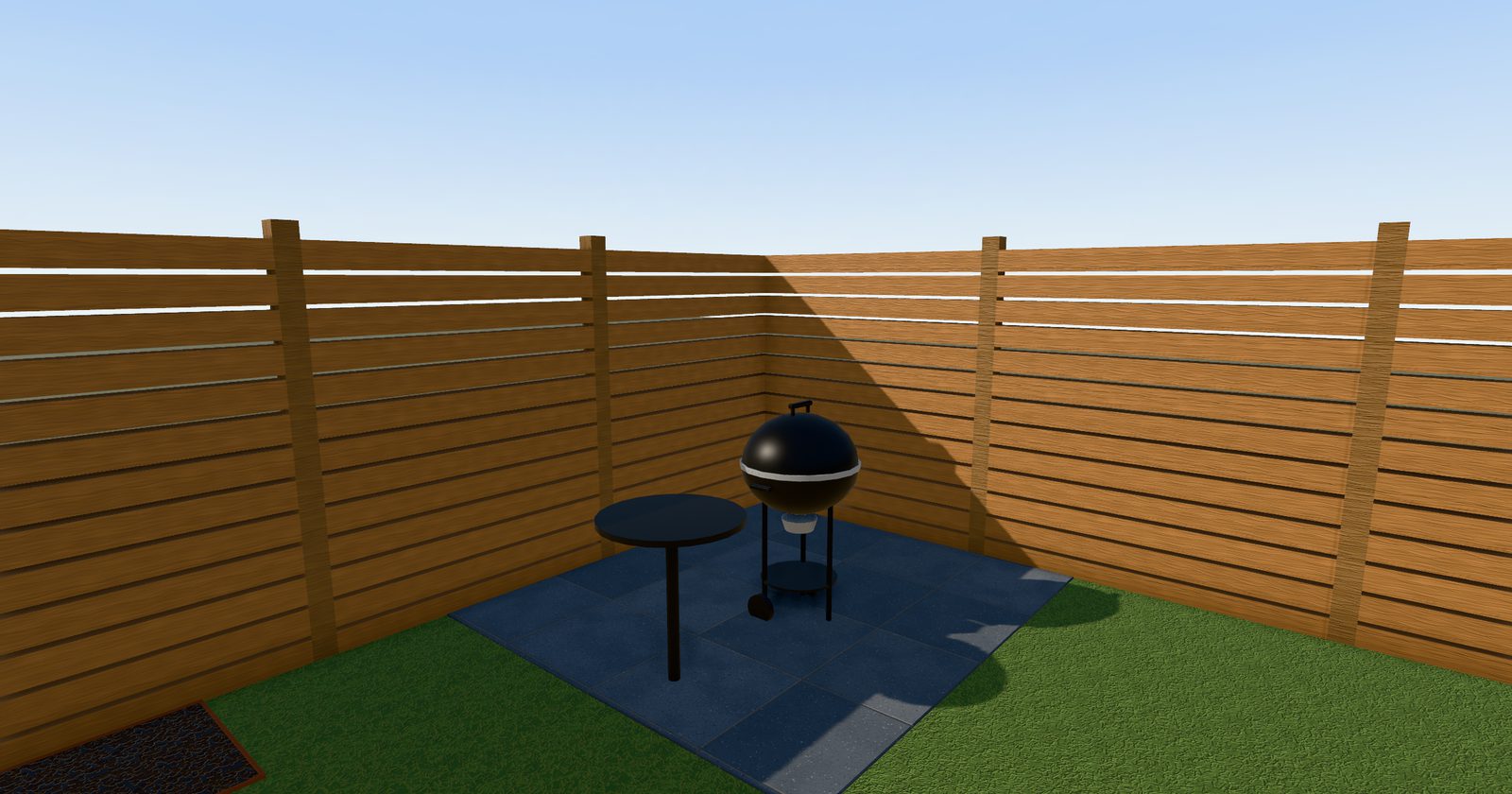
The barbecue lives against the fence, because that is where it was put the day it came out of the box. Each time you lift the lid you step back onto the lawn. The tongs lie on the grass, the plate of meat balances on the fence post, and the smoke goes up the timber.
Turning a corner of the garden into a proper barbecue place is a common plan, and the usual mistake is to measure the barbecue. The barbecue is the small part. Here is the sum for a kettle barbecue in Duimstok, tight in the corner and then with room.
The barbecue itself: 61 × 58 cm
Duimstok's Kettle Barbecue is the common 57 cm kettle on three legs. It stands on 61 × 58 cm of ground, the grill is at 77 cm and the lid's handle at 1.07 m. On that alone it would fit anywhere.
The garden is the 9.10 × 4.80 m back garden we use for every example, with a deck and a dining table by the house. The barbecue goes in the far corner, on a pad of Bluestone 60×60 of 2.45 × 2.20 m, 5.39 m².
Tight in the corner
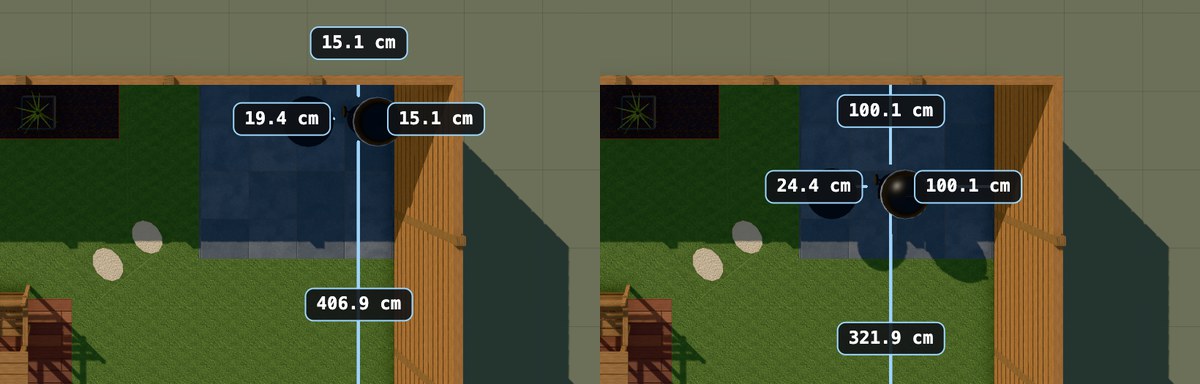
Push the barbecue into the corner and select it from above. Duimstok reads the gap on each side: 15 cm to the back fence, 15 cm to the side fence, and 19 cm to the small table beside it. It looks neat, and most of the pad is left over.
It does not work. The barbecue is nearly touching two timber fences, and the cook stands with the fence at one elbow. Your barbecue's manual gives a distance to keep from fences, hedges, sheds and anything else that can burn, and it is far more than 15 cm.
With room: a metre out
Now click the reading to the back fence and type 100, and do the same for the side fence. The barbecue moves out to 1.00 m from both. We use a metre as an example; use the figure from your own manual.
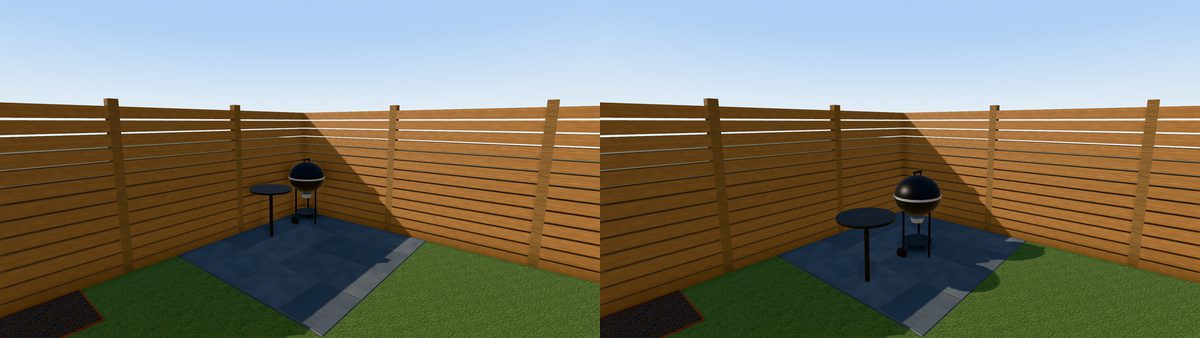
Out there the pad starts to make sense. The cook has 62 cm of paving to stand on in front of the barbecue, a 60 cm round table stands 24 cm to the side for the plate and the tongs, and there are still 3.2 m of clear garden between the barbecue and the house.
The sum for the pad
Add it up from the fence outwards:
- Depth: 1.00 m behind, 58 cm of barbecue, 62 cm to stand: 2.20 m.
- Width: 1.00 m beside, 61 cm of barbecue, 24 cm, a 60 cm table: 2.45 m.
So a kettle that takes a third of a square metre asks for a corner of about 2.45 × 2.20 m, 5.4 m², before anyone else stands near it. If your manual asks for more than a metre, the pad grows by the same amount in both directions.
Getting there with a full plate
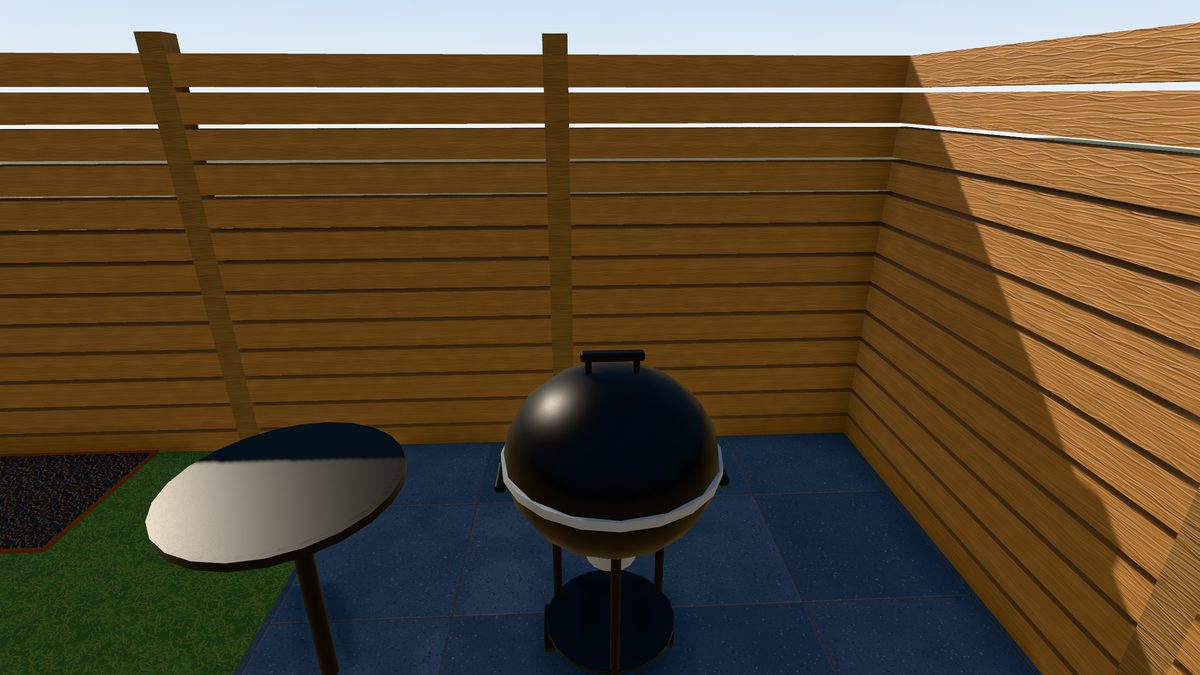
The corner also has to be reached. Here a short run of stepping stones leads from the deck to the pad, so nobody carries a tray across wet grass. Walk it in the app from the dining table to the barbecue and back, and look at it once from the garden doors: the barbecue is in view from the table, which the cook will want.
Try it
- Open your plan, press O for the view from above and open Catalog.
- Search for bluestone, pick Bluestone 60×60 and lay the pad in the corner; type its size on the bar.
- Search for barbecue, pick Kettle Barbecue and put it on the pad.
- Select it and read its gaps. Click the reading to a fence and type the distance from your manual.
- Add a Bistro Table beside it, then press Walk and stand where the cook stands.
Limits worth knowing
- The catalog has one barbecue, the 57 cm kettle. A gas barbecue or a smoker with other sizes can be stood in for by resizing it, as a rough guide only.
- Duimstok shows the distances. It does not know which distance your barbecue needs: that is in the manual.
- The barbecue gives no light in the evening view, and smoke and wind are not shown.
Questions people ask
How far should a barbecue be from a fence?
As far as its manual says. A barbecue's instructions name a minimum distance from anything that can burn; follow that figure, not a general one. In this example we used 1 m to show the room it takes.
How much space does a barbecue area need?
For a kettle barbecue with a metre behind and beside it, standing room and a small side table, about 2.45 × 2.20 m. A table and chairs to eat at need their own space on top of that.
What should a barbecue stand on?
A firm, level surface that does not burn or scorch, such as stone, concrete pavers or gravel. A lawn is soft under the wheels and the legs.