
Decking or tiles for a terrace? See both first
Two samples on the kitchen table
One is a short offcut of hardwood decking, warm and red-brown. The other is a ceramic tile, cool and grey. Both look good on the kitchen table. Neither tells you what 13 square metres of it will look like against your own wall, next to your own lawn, at eight in the evening when you actually sit outside.
This post compares the two the way you would live with them: the look by day and at dusk, what each asks of you over the years, and what changes in the build. Then it shows how to lay both on your own terrace in Duimstok and switch between them in a click.
The same terrace, twice
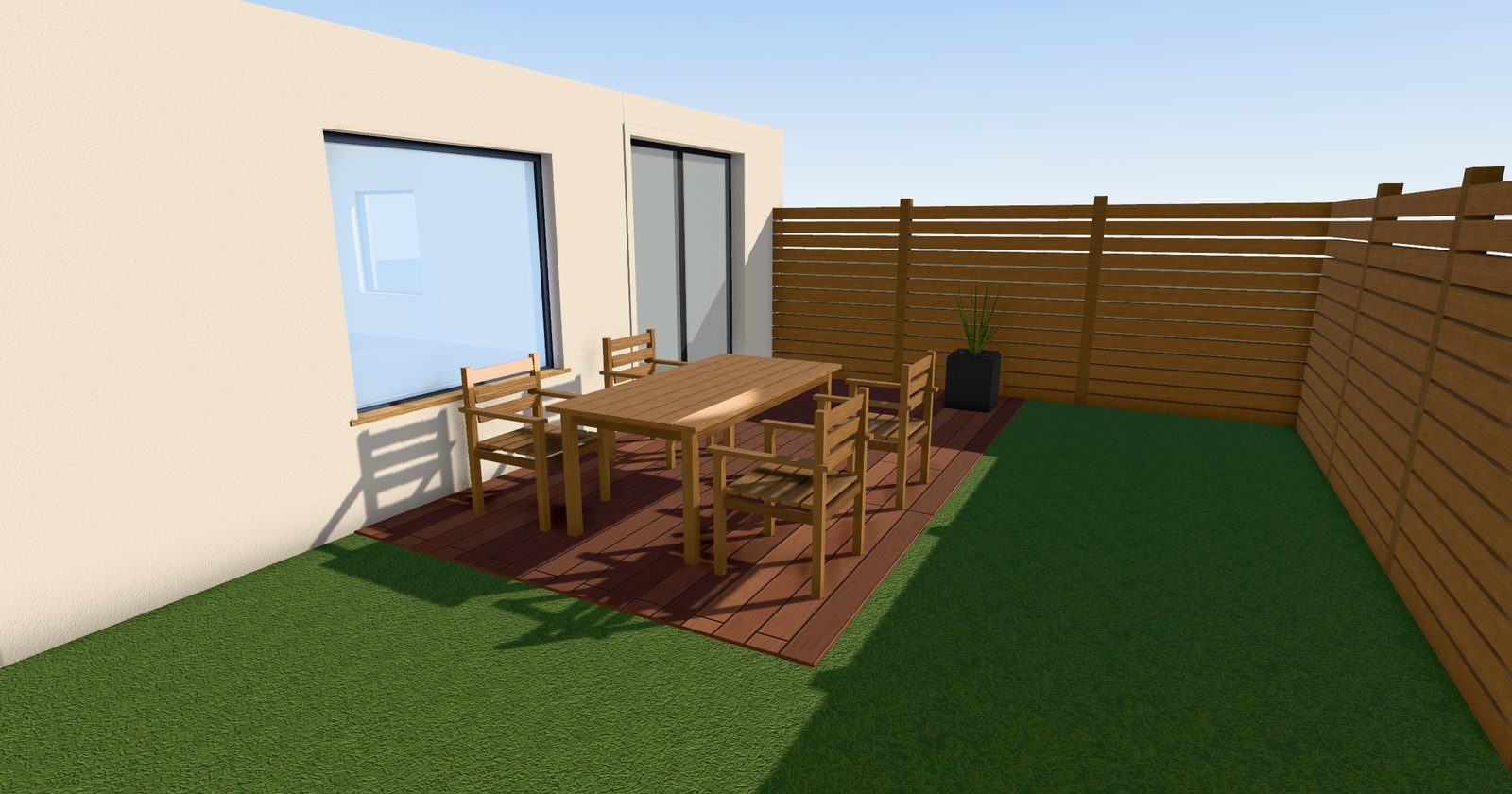
The terrace in these pictures is 5.00 × 2.70 m against the house, 13.5 m², with a table for four. On the left it is Decking Hardwood, on the right Ceramic Tile Concrete-Look Grey. Same table, same lawn, same fence. Nothing else changes between the pictures, so the difference you see is the covering alone.
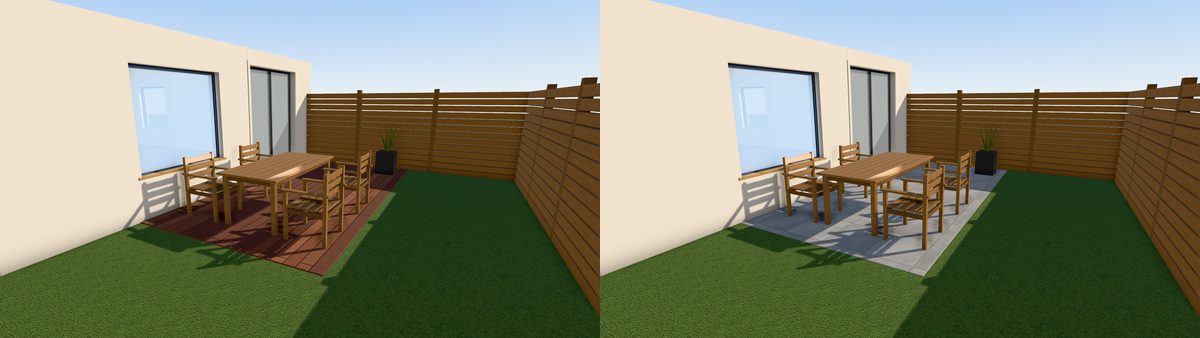
By day the difference is mostly colour. The deck is darker and warmer, and it pulls the terrace into the garden. The grey tiles are lighter, so the terrace looks larger and reads as a room outside the house.
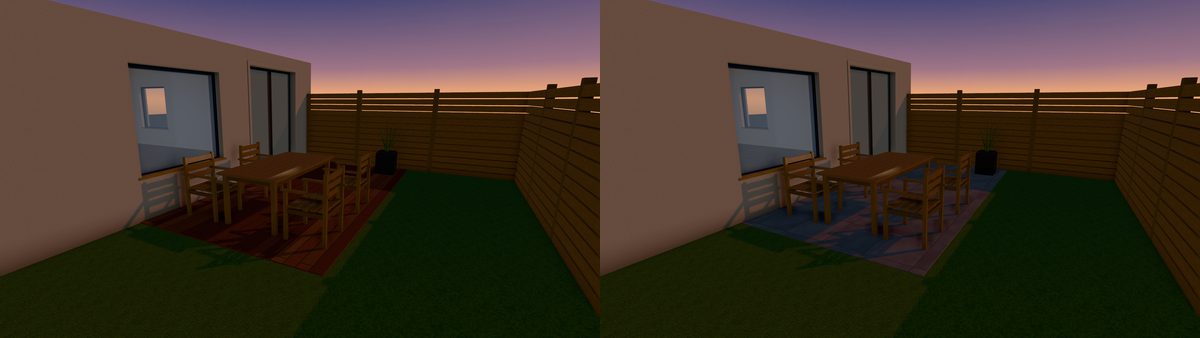
At dusk the deck almost vanishes into the lawn, while the tiles keep the terrace's edge. If you sit out in the evening, that is worth knowing before you choose, and it tells you where you will want lights.
Living with it
- Underfoot: timber feels warmer to bare feet in the sun and drains fast. Ceramic stays cooler; choose an outdoor tile with a slip-resistant finish.
- Upkeep: hardwood turns silver-grey unless it is oiled, and the gaps between boards catch leaves. Ceramic tiles need little more than a brush and water, but the joints can grow moss in shade.
- The build: a deck stands on joists and supports, which suits ground that is not flat. Tiles want a firm, level base, laid on pedestals, mortar or a bound bed; ask your contractor which suits your ground and the height to the door sill.
Or both
Many terraces end up with both. Tiles by the door, where chairs scrape and wet shoes land, and a deck further out where the terrace meets the lawn and bare feet go. The line between them can follow the furniture: the dining area in tiles, a lounge corner in wood. In Duimstok that is two coverings drawn side by side, each with its own area on the bar, so you can try where the line falls by dragging one side and walking out of the door again.
The numbers you still need
Both are 13.5 m² here. For the deck, ask for the board length and width your supplier sells and count boards per row. For 60 × 60 tiles, 13.5 m² is 37.5 tiles by area, before cuts; the tile planner in Duimstok counts the whole and cut tiles for each laying pattern.
Try it
- Press O for the view from above and open Catalog.
- Search for decking, pick one, and drag out the terrace, or type its size on the bar.
- Press Walk and look at it from the door and from the end of the lawn.
- Select the terrace, press Select all like this, and pick a tile in the catalogue to lay it in that instead.
- Press Evening in the catalogue and look again.
Limits worth knowing
- Duimstok shows the look and the area; it does not price upkeep or compare how long each lasts.
- It draws the surface, not joists, pedestals or the base under it.
- Colours are drawn from retailers' photographs; hold a real sample against your wall before you order.
Questions people ask
Is decking or tiling better for a terrace?
Neither in general. Decking feels warmer and suits uneven ground; ceramic tiles need less upkeep and a firm, level base. The look against your house often decides it.
Do ceramic outdoor tiles get slippery?
Some do when wet. Choose a tile sold for outdoor use with a slip-resistant finish.
Does a hardwood deck need oiling?
Only if you want to keep its colour. Left alone, hardwood weathers to silver-grey.