
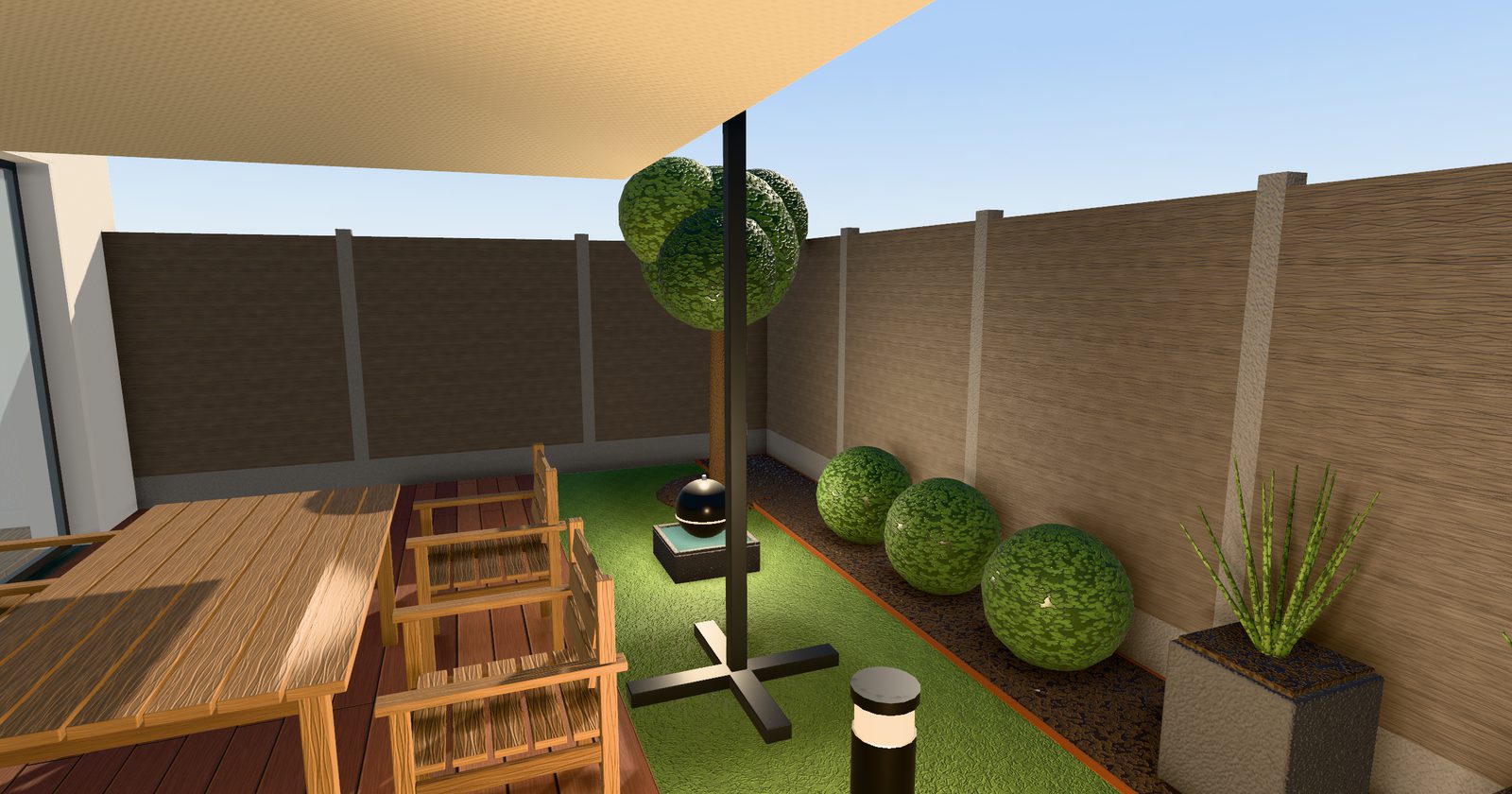
Choose the fence with your client, in their own garden
The biggest surface in a small garden
In a small garden the fence is not a border round the design. It is the design: nine metres of it along the back and five down each side add up to more square metres than the deck. Yet it is often chosen last, from a photo of a fence in someone else's garden, on the day the order goes in.
This post shows how to choose it with the client in their own garden instead: the same layout with different fences, changed while they watch, walls and gates built in. Every picture is a screenshot of Duimstok.
One garden, four fences
Here is the same garden, from the same spot on the lawn, with four different fences. Nothing else changed.
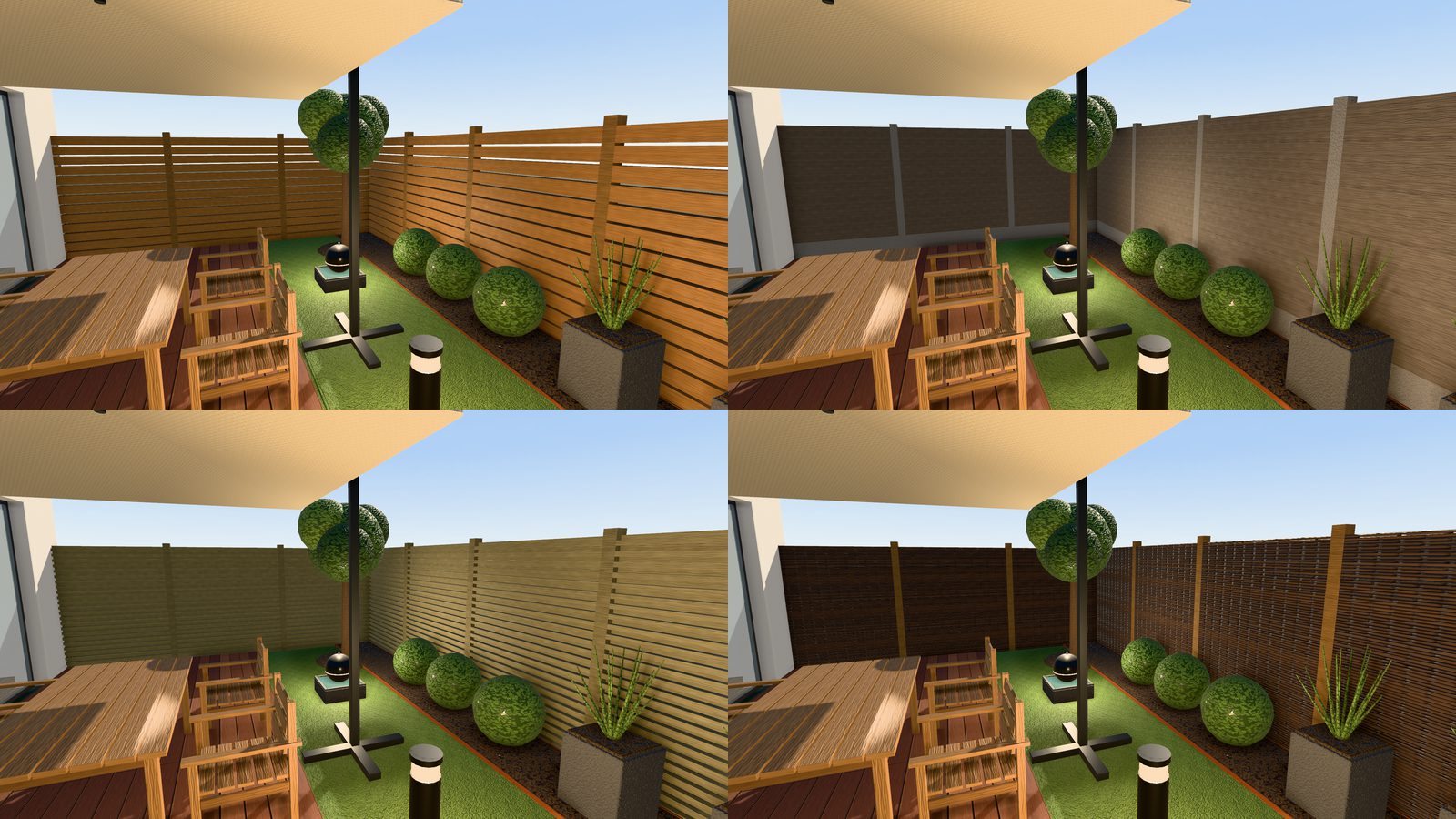
The slats make it warm and give glimpses of light between the boards. Wood between concrete posts reads as solid and practical. The louvred screen lightens the whole garden. The willow makes it darker and softer, and makes the planting in front of it stand out. A client who sees these four side by side usually knows within a minute, and no photo of a stranger's garden gets them there.
Thirty-two fences and garden walls, built as they are sold
Duimstok has 32 fence and garden wall types, modelled on what Dutch and Belgian DIY stores and fence makers sell, and coloured from their own photographs:
- Board screens in timber, Douglas fir, hardwood, green-treated pine and black, two slat screens, and a louvred screen.
- Composite, plain and teak, and wood and concrete fences on concrete posts and plinths.
- Concrete panels: plain, anthracite, rock-face and slate-face.
- Metal: wire mesh, double-wire mesh, steel bars and a Cor-Ten steel screen.
- Natural screens: trellis, picket, chestnut paling, reed, black bamboo, woven willow and heather.
- Walls and hedges: three gabion walls, a brick garden wall, and a hedge.
Each one is built as itself, slats, louvres, wire, stone and coping, and each comes with its own usual height and thickness. Everything stays inside the fence's own thickness, so the tape, the gaps and the drawing all measure to the face you would actually build against.
Change a fence in two clicks
From above, choose Select and click a fence. The bar underneath says what it is made of; pick another type from the list, or press T to step through them while you watch it change.
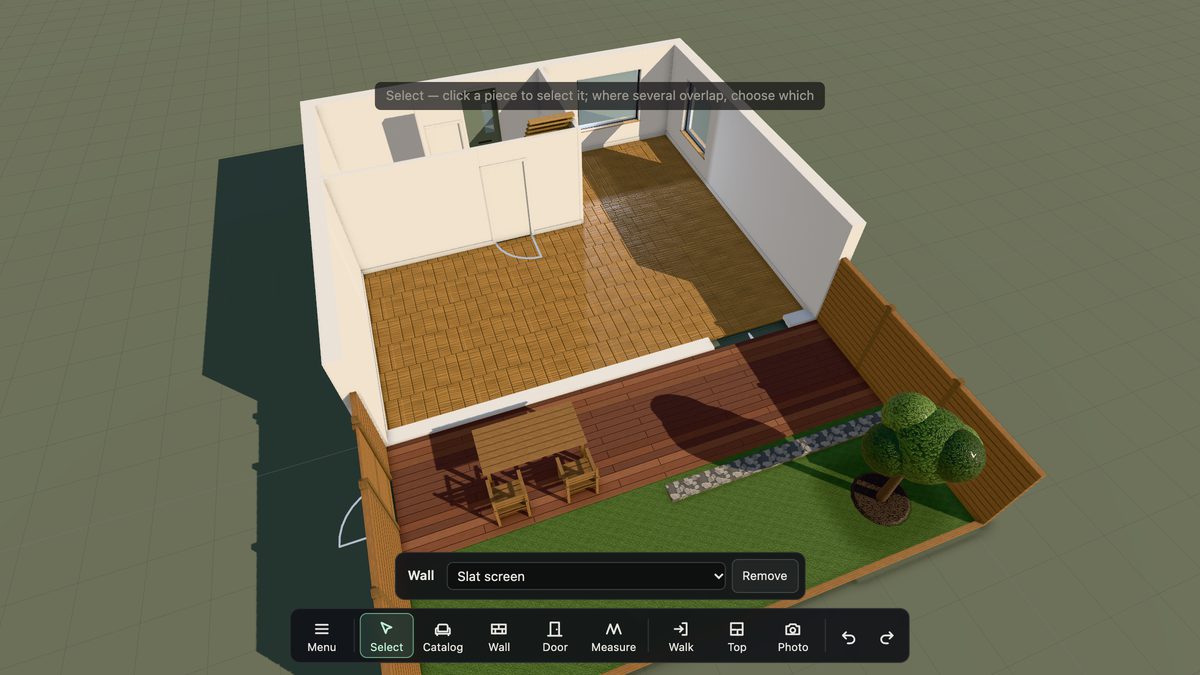
A practical way to run the conversation: set every fence to the client's first idea, walk them to the place they will sit most, and step through the two or three alternatives with T. Change one side only if they want the back fence different from the sides.
Build a garden wall from above
New walls are built the same way. Press Wall on the toolbar, pick the type, and drag the wall out on the ground. It snaps to the walls and fences around it, and its length is written above it as you drag. T changes the type mid-drag.
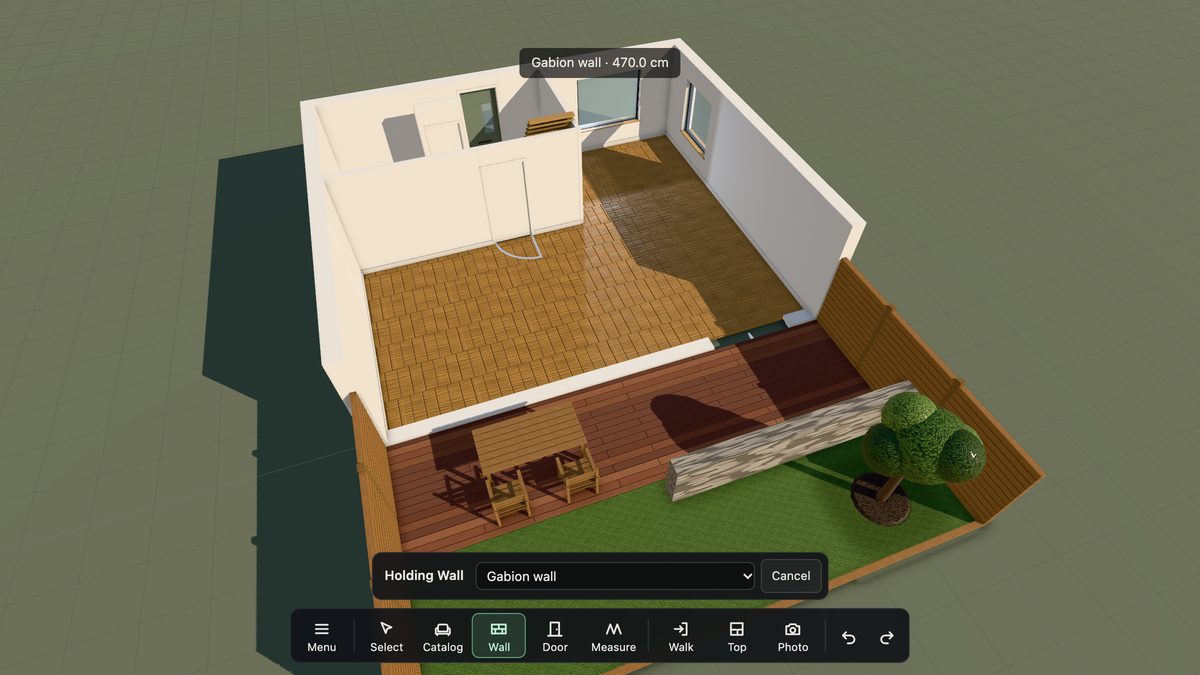
Then walk along it, to check that it does what it was meant to.
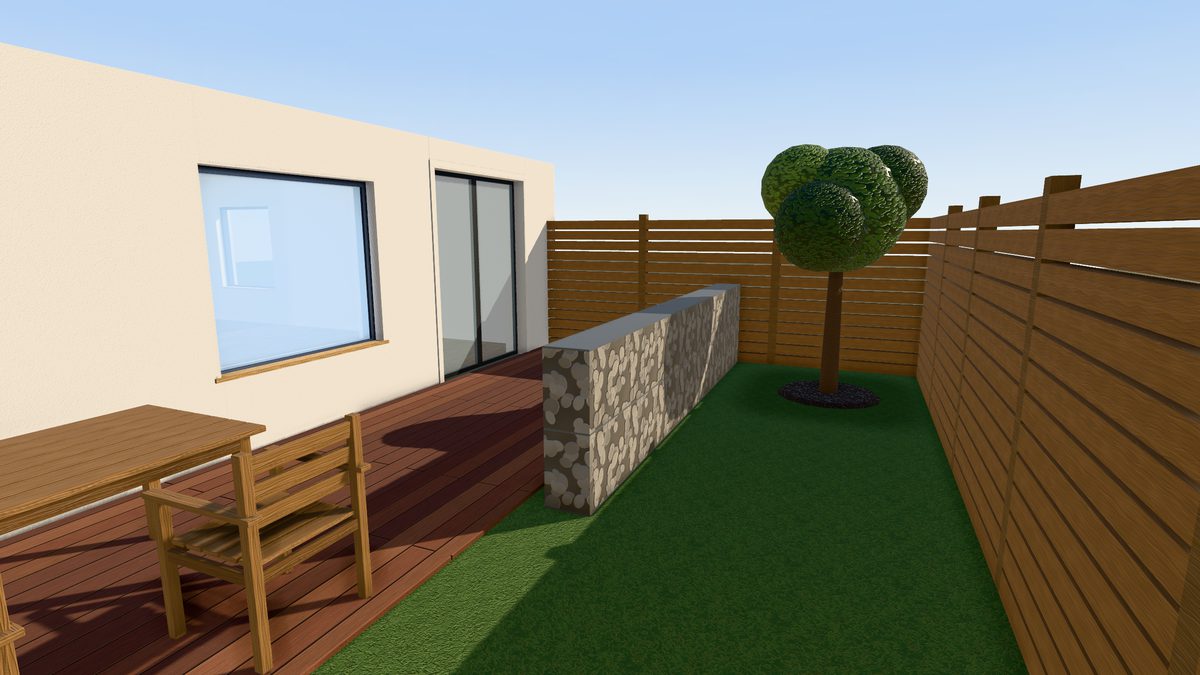
Hang a gate
A gate is a door in a fence. Press Door, press T until the bar says Wooden garden door, and click the fence where it should go.
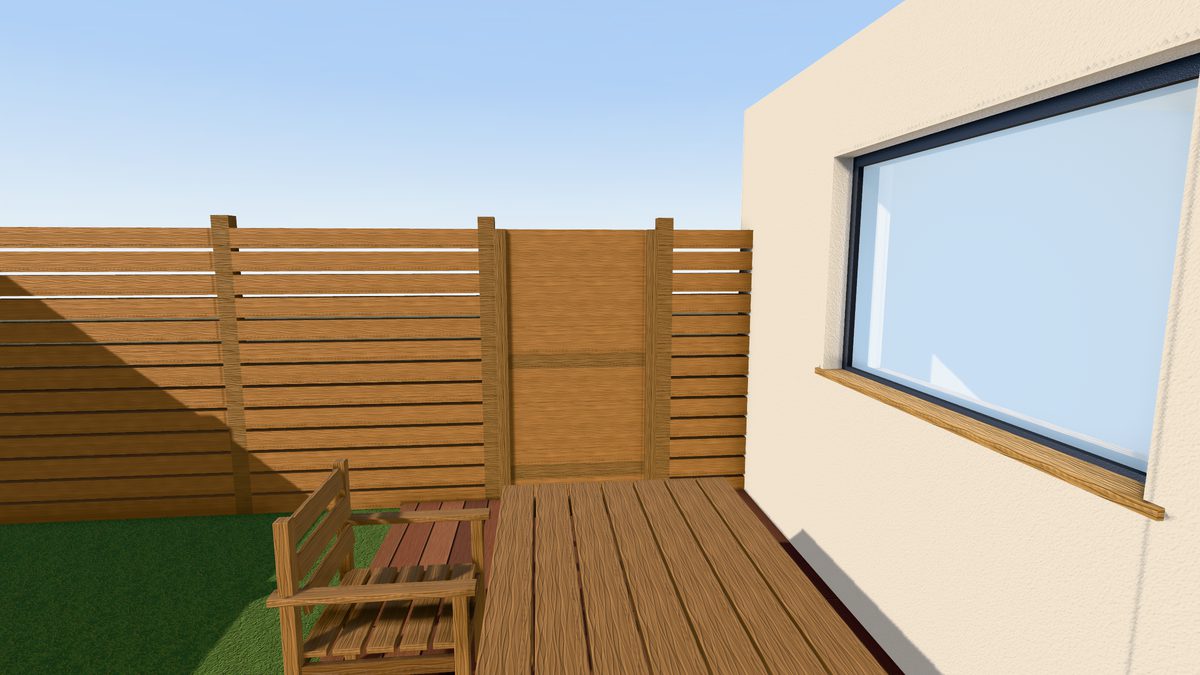
Every wall, fence and gate built from above goes on ⌘ Z like everything else, so trying something costs nothing.
What to know before you rely on it
- Walls are straight, at any angle. A curve is several short straight walls.
- The ground is flat, so a fence stepping down a slope is not modelled.
- Fences are not in the quantities or the quote. Their lengths are on the drawing, and the tape measures any stretch.
- Types are modelled on real products, not tied to a supplier: check the exact panel sizes with yours.
Questions people ask
How many fence types does Duimstok have?
32 fences and garden walls, from slat screens and concrete panels to gabions, willow and a hedge, plus plaster, brick, concrete and timber panelling for the house.
Can I give the back fence a different type from the sides?
Yes. Each wall and fence has its own type. Select one and change it, and the others stay as they are.
Can I add a gate to a fence?
Yes. Choose Door on the toolbar, press T until the bar says Wooden garden door, and click the fence where the gate goes.
Are fences included in the quote?
Not yet. The quote counts the ground cover and the pieces you placed. Read each fence's length off the drawing, or measure it with the tape.