
Block, stone or sleeper steps: which suits your garden?
Three photos on the fridge
You have decided to raise the back of the garden, and the steps up to it are the part you will touch every day. On the fridge there are three photos: grey block steps from a showroom, warm natural stone from a magazine, and sleepers filled with gravel from a neighbour's garden. All three look good. None of them is your garden, with your fence and your lawn and your wall behind them.
The choice matters more than it looks. The steps sit in the middle of the view from the house, they are the first thing a visitor's foot meets, and once the blocks are set in mortar nobody changes their mind cheaply. This post explains what each kind is made of, works out what one flight takes, and shows how to stand in front of all three in your own garden in Duimstok before you order anything.
The same flight, three ways
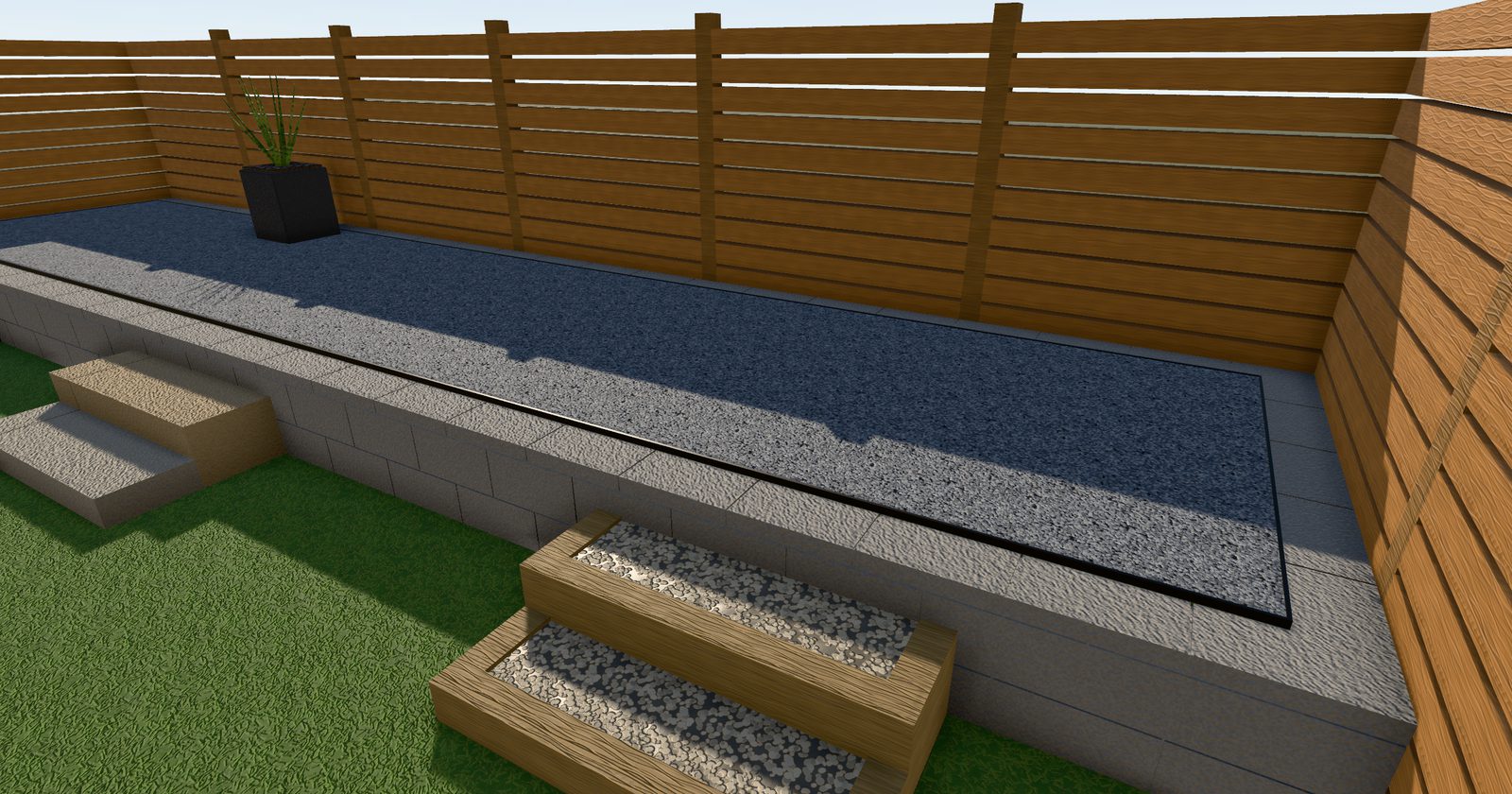
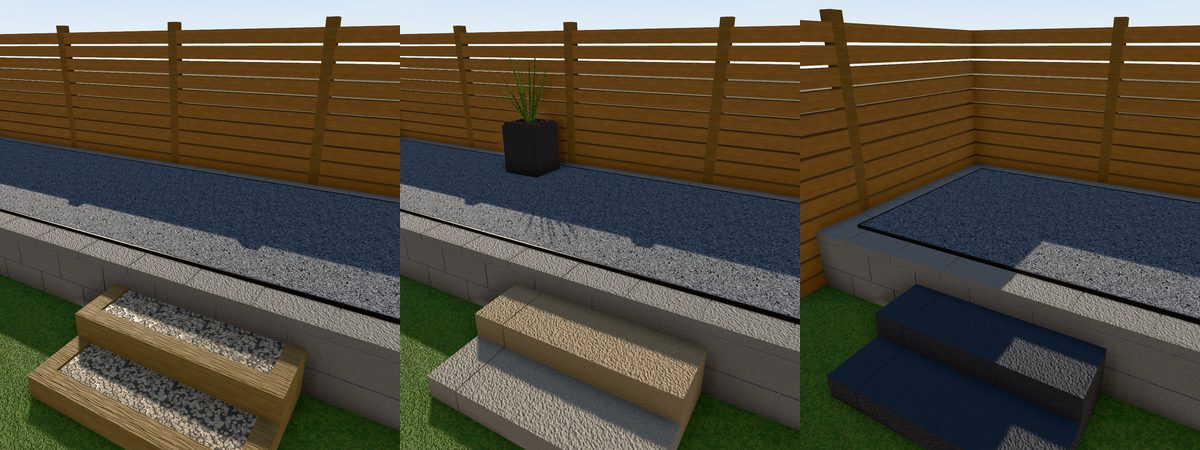
Whatever it is made of, a flight of garden steps follows from the height it climbs. The garden in these pictures is raised 45 cm, so every flight here climbs in three risers of 15 cm, with two treads of 35 cm between them. Each flight stands 70 cm out from the wall into the lawn, and wants about 75 cm of free ground in front of its foot to step off onto. Only the material changes:
- Concrete block: solid step units, 100 × 35 × 15 cm, the size most of mainland Europe sells. Laid side by side, each one a tread and a riser at once. Grey, anthracite or sand.
- Natural stone: the same solid blocks in granite, sandstone, limestone or bluestone, their tops sawn flat to walk on, set on mortar. Each stone is a slightly different tone, which is most of their charm.
- Sleeper and gravel: a timber sleeper on edge at the front of each tread, one down each side, and compacted hardcore topped with gravel behind it. The flight people build themselves in a weekend.
What one 1.2 m flight takes
A metre-wide flight is the narrowest most people find comfortable for two feet and a bag of compost. These flights are 1.2 m wide, a size that lets two people pass, so here is what that width costs you in pieces.
- Block or stone: each tread is a row of one whole 100 cm unit and a 20 cm piece. Both pieces can be cut from one unit, so the two treads take three units and leave a 60 cm offcut, plus whatever the upper row stands on: a course of the same blocks or a concrete base, as your supplier recommends.
- Sleepers: a sleeper is 2.40 m long, so one sleeper cut in half gives the two 1.2 m fronts. The sides of the flight need 70 cm a side, which a second sleeper covers with a metre to spare. Behind the fronts, each tread holds about 1.0 by 0.25 m of gravel.
The numbers are small, which is the point: the difference between the three is not the quantity but the look, the feel underfoot and how long each lasts. Gravel treads move and need topping up; stone and block do not. Sleepers weather and, depending on the timber, rot sooner than either. Those are judgements to make for your site. What you can settle before buying anything is which one you want to look at every day.
See them where they will be
A sample on the patio table tells you the colour. It does not tell you how a flight of anthracite blocks reads against a pale wall, or whether oak sleepers fight with a wooden fence. For that you need the steps in their place, at their size, from where you will see them.
In Duimstok, select a flight from above and the bar shows what it is made of: how many steps of how many centimetres, a Step type menu, its colour and its width. Change the type and the flight is rebuilt on the spot, the same size, in the new material. Then walk down the garden from the house, or stand at the kitchen window, and look.
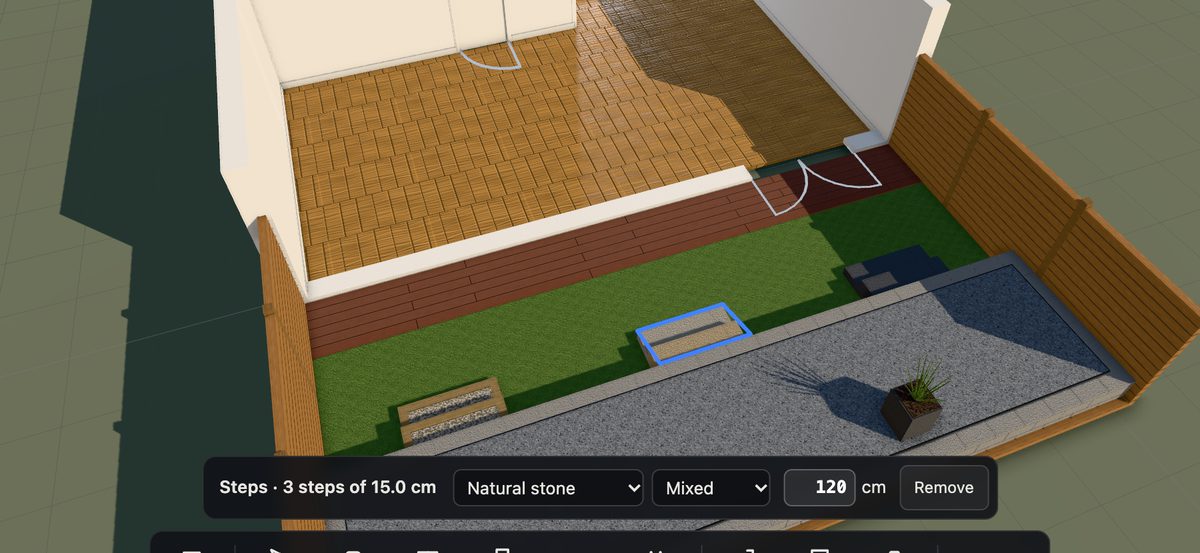
You do not have to choose one flight for a whole garden either. These pictures put all three on one level, a metre and a half apart, so the comparison is fair: same wall, same light, same lawn. In a real design you would keep the one you like and remove the others.
Try it
- Press O for the view from above, then Level on the toolbar.
- Type the height on the bar, for example 45 cm, and drag out the area that goes up.
- With the level selected, press Steps and click the side the steps go on.
- Click the flight to select it, choose Concrete block, Natural stone or Sleeper and gravel in the bar's menu, and pick a colour.
- Type a width on the bar if you want it wider than 100 cm, then double-click the lawn to walk up.
Limits worth knowing
- Three kinds of step so far. Timber decking steps and poured concrete are not among them.
- The flight's rise and treads follow the usual rules: risers of about 15 cm, never over 17, on 35 cm treads. You cannot type a steeper flight.
- Steps go on a straight side of a level, not on a curved one.
- The steps are not in the quantities list yet; the counts above are yours to do.
Questions people ask
What are the best materials for garden steps?
Concrete block and natural stone last longest and need least care; sleepers and gravel are cheapest and easiest to build yourself but need topping up and weather over the years.
How many sleepers do I need for garden steps?
One per two treads of 1.2 m, cut in half for the fronts, plus enough for the sides. A 45 cm rise with two treads takes two sleepers.
How wide should garden steps be?
At least 60 cm for one person, about 1 m to be comfortable, and 1.2 m or more if two people should pass on them.