
Artificial grass or turf? Quote both from one plan
"And what would artificial grass cost?"
The design is approved, the quote has turf in it, and then at the kitchen table the client asks the question: what if we did artificial grass instead? No mowing, the children on it in February. You say you will send a price, drive back to the office, and redraw the lawn in a second file to get its square metres again.
The lawn does not change shape because its material does. In Duimstok the same lawn can be laid again as the other product in one step, and both prices come off the same drawing.
The lawn: 17.4 m² in two pieces
The garden here is the small back garden we use for every post: a hardwood deck by the house, grey gravel by the kitchen, a planting bed along the back fence, stepping stones to the shed. The lawn was laid with Fill, which covers the free ground up to everything round it, and it came out in two pieces, one either side of the stepping stones.
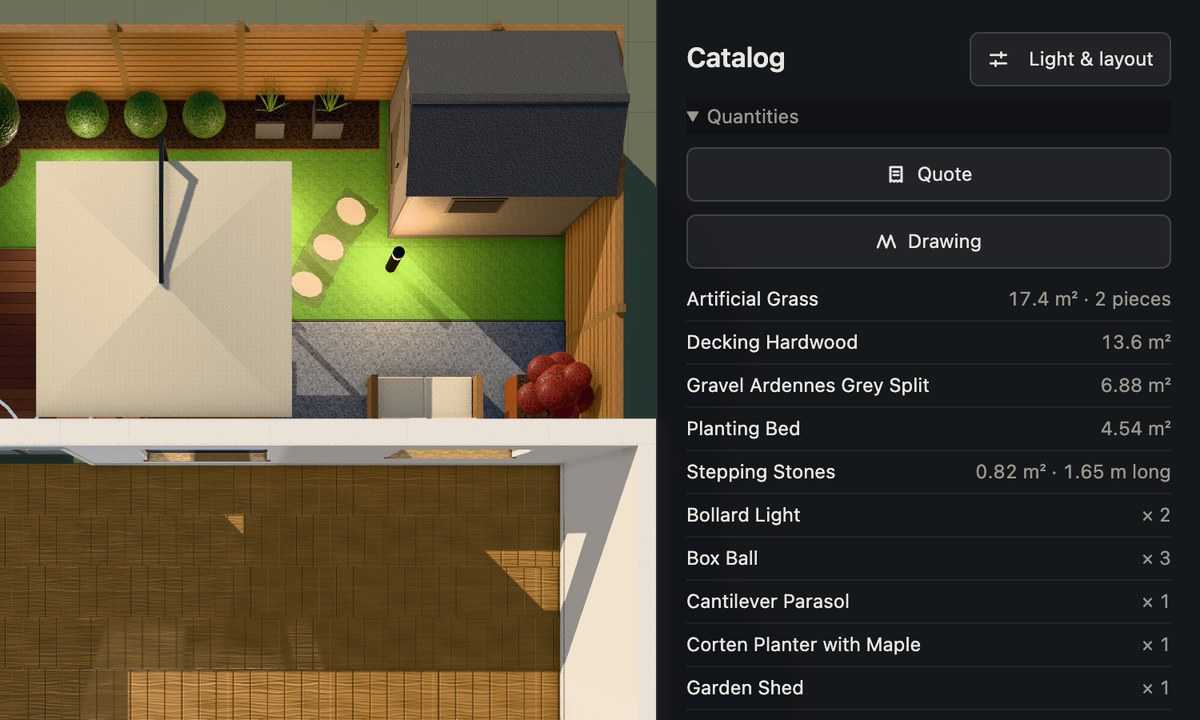
Quantities reads it off the real outline, curves and corners included: Lawn Turf, 17.4 m², 2 pieces. That is the number the turf line of the quote is priced from.
Lay it again as artificial grass
Select the lawn, press Select all like this so both pieces are in, and pick Artificial Grass in the catalogue. Every piece is laid again in the new product, where it was and as big as it was, in one undo step. Quantities now says Artificial Grass, 17.4 m², 2 pieces: the same area, because it is the same shape.
Same area, different order
The square metres are the same; what you order from them is not.
- Turf comes by the square metre, usually in rolls of about 1 m², laid in a brick bond and cut at the edges. For 17.4 m² that is 18 rolls, plus a few for the curves round the bed and the stepping stones.
- Artificial grass comes off a roll, typically 2 m or 4 m wide, sold by the running metre. What you pay for is the roll width times the length that covers each piece, offcut included, and every joint between two widths is a seam to tape and glue. Measure each piece's long side with Measure to choose the width that leaves the fewest seams.
The base under each is different work too, and that is your price per m² to set. Duimstok does not hold a price; you type yours once and it is kept on that computer for the next quote.
Two quotes from one plan
Open Quote with the lawn as turf, type your prices, and print it or save a CSV. Re-lay the lawn as artificial grass, open Quote again, type the price per m² for that line, and print the second one. The deck, the gravel and the planting are the same lines on both, so the client compares exactly what changes.
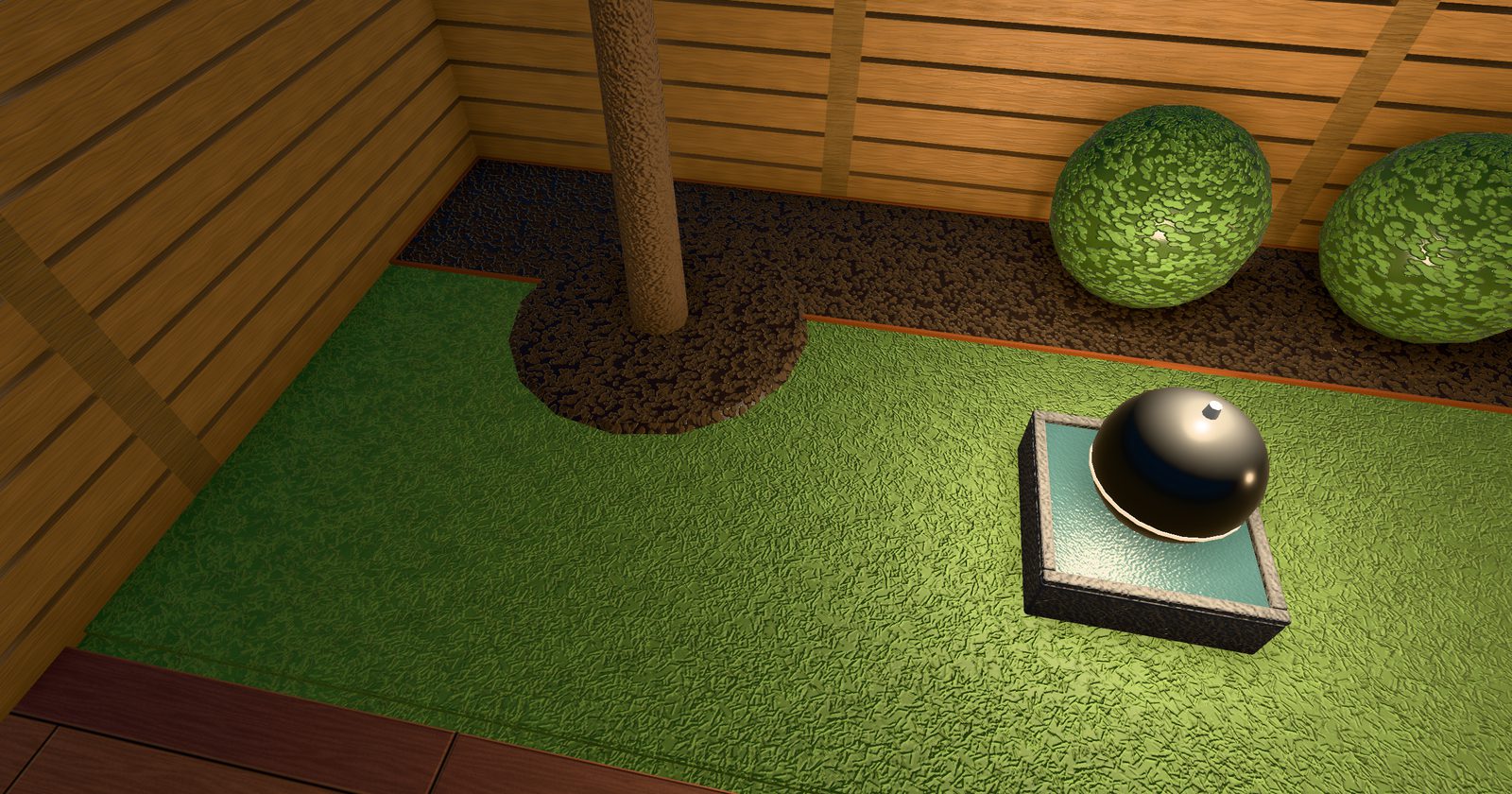
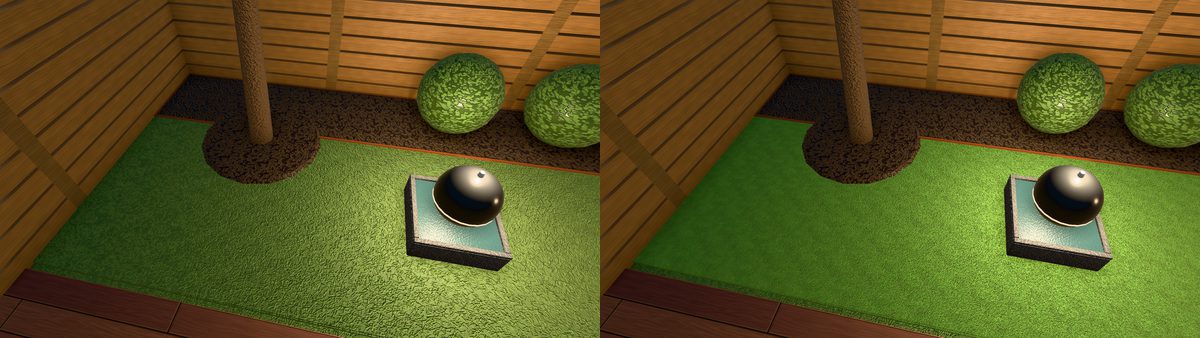
Seen from standing height the two lawns look much alike, which is honest: the difference the client will feel is in the price, the maintenance and the feel underfoot, not in a picture.
Try it
- Press O for the view from above, open Catalog and search for turf.
- Pick Lawn Turf, choose Fill on the bar and click the free ground.
- In Catalog, open Quantities and note the m²; press Quote, type your prices and print it.
- Select the lawn, press Select all like this, search for artificial and pick Artificial Grass.
- Open Quote again, type that line's price, and print the second quote.
Limits worth knowing
- Quantities gives square metres, not rolls or seams; the roll width is your calculation.
- The quote prices per m² and per piece. A base layer, edging or labour goes in as your own price per m² on the lawn line.
Questions people ask
How many rolls of turf do I need?
With rolls of about 1 m², one per square metre of lawn, plus a few for cuts along curved edges.
How wide does artificial grass come?
Usually 2 m or 4 m wide, sold by the running metre. Choose the width that covers the lawn with the fewest seams.
Is artificial grass measured the same way as turf?
The area is the same. The order is not: turf by the square metre, artificial grass by roll width times length, offcut included.